Cimarron Kansas Network

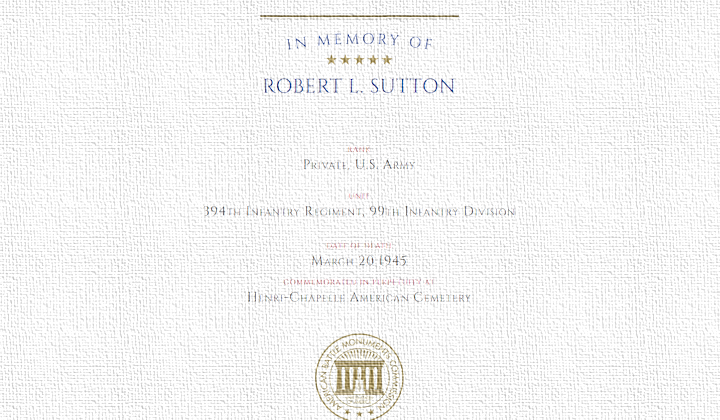
Robert L. Sutton

Memorial Day

PVT Robert L Sutton
394 INF REG - 99th INF DIV
1922? - March 20, 1945

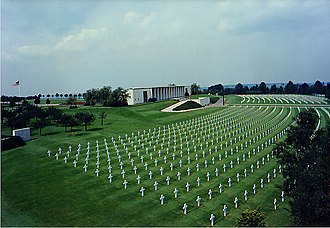
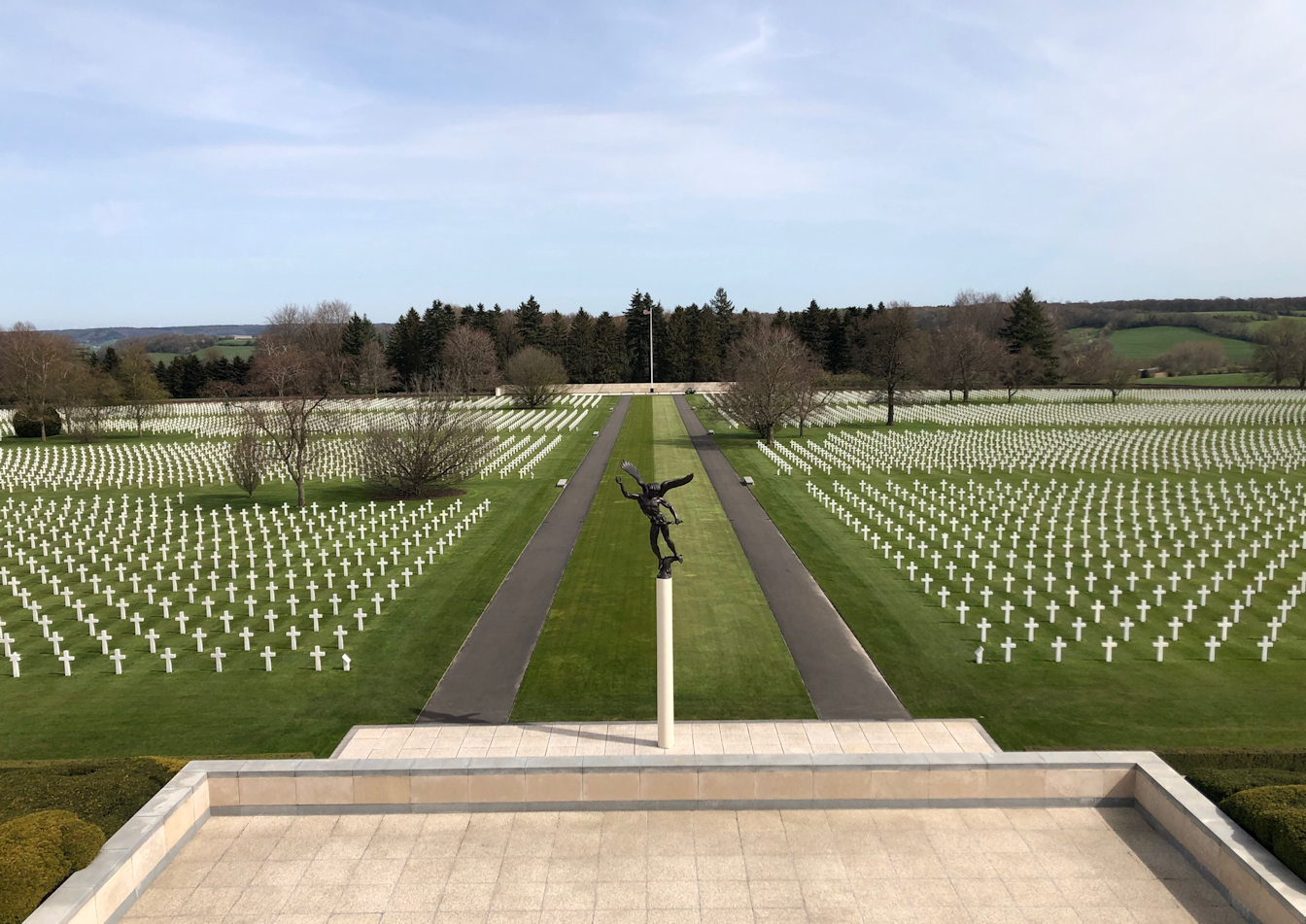
Henri-Chapelle American Cemetery

Robert L. Sutton, from what we can tell, was born in Washington.  Probably in Olympia or close to Olympia.  We know he was living in Ensign, KS in 1930, when he was eight years old.  We know he attended school in Ensign at that time and that he was living with his Aunt (his father’s sister) and his Maternal Grandmother.  We do not know how long he lived in Ensign.  At the time he entered the Army he was living in Washington.

Private First Class Sutton served in the 394th Infantry Regiment of the 99th Infantry Division, a unit that played a significant role in the European Theater. The division was notably involved in the Battle of the Bulge and subsequent operations as Allied forces advanced into Germany.  During March 2–3, 1945, the 394th Infantry Regiment of the 99th Infantry Division was actively engaged in offensive operations as part of the Allied advance into Germany. On March 2, the division initiated an offensive toward Cologne, crossing the Erft Canal near Glesch. This maneuver was part of a broader strategy to penetrate German defenses west of the Rhine River. Following the canal crossing, the regiment focused on clearing towns west of the Rhine, encountering varying degrees of resistance as they advanced.  It is quite likely that PVC Sutton’s involvement in this action resulted in his death, on March 20, 1945.  He was awarded a purple heart.   He is buried in the Henri-Chapelle American Cemetery, Belgium. The Henri-Chapelle American Cemetery and Memorial is located near Hombourg, Belgium. It is the final resting place for 7,992 American military personnel who died in World War II.  

A Brief History of the The 394th Infantry Regiment

A Brief History of the The 394th Infantry Regiment, part of the 99th Infantry Division of the U.S. Army, played a significant role in several major campaigns during World War II, particularly in the European Theater.
Summary of Activities:
Activation & Training: The 394th Infantry Regiment was activated in 1942 and trained at Camp Van Dorn, Mississippi, and later in Camp Maxey, Texas, before deploying overseas in 1944.
Arrival in Europe: The regiment landed in France in early November 1944 and was quickly moved to the front lines along the Belgian-German border, where it took up defensive positions in the Hürtgen Forest and Ardennes region.
Battle of the Bulge (December 1944 – January 1945): The 394th played a pivotal role in halting the German advance during the Battle of the Bulge, especially in the northern shoulder of the bulge near Elsenborn Ridge. Units such as the 394th’s Intelligence and Reconnaissance Platoon, under Lt. Lyle Bouck, made a heroic stand at Lanzerath Ridge, delaying German forces on December 16, 1944 — a feat later recognized with the Presidential Unit Citation.
Rhine Crossing and Advance into Germany (Spring 1945): In March 1945, the regiment crossed the Remagen Bridge over the Rhine River and helped establish a bridgehead, enabling deeper Allied advances into Germany. The unit pushed through the Ruhr Pocket, capturing large numbers of German troops and liberating towns along the way.
End of the War: The 394th continued eastward until VE Day (May 8, 1945), after which it took on occupation duties in Germany.
The 394th Infantry Regiment earned a reputation for bravery and resilience, particularly for its actions during the Ardennes Offensive and the crossing of the Rhine. Several members and sub-units were highly decorated for valor in the face of overwhelming odds.