Cimarron Kansas Network

Roy E Plummer

Memorial Day

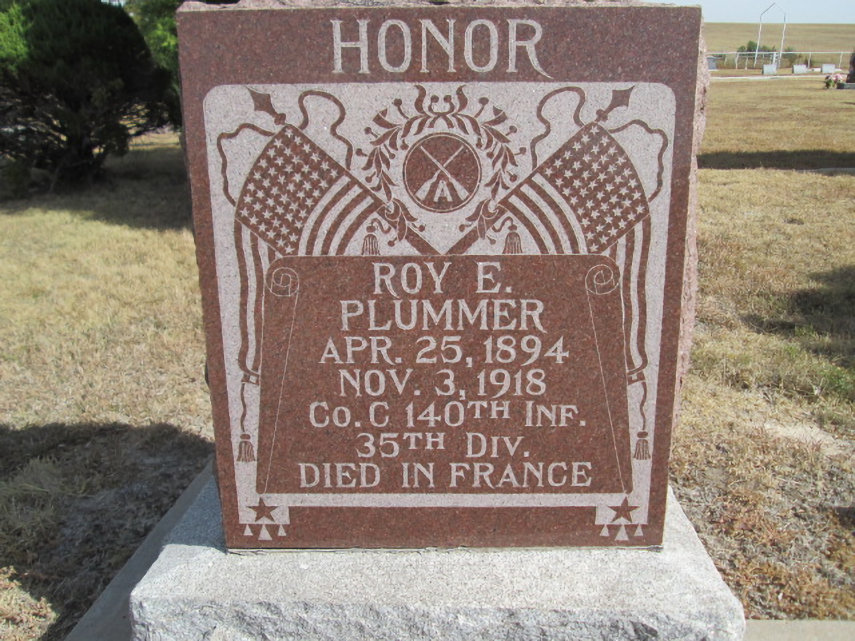
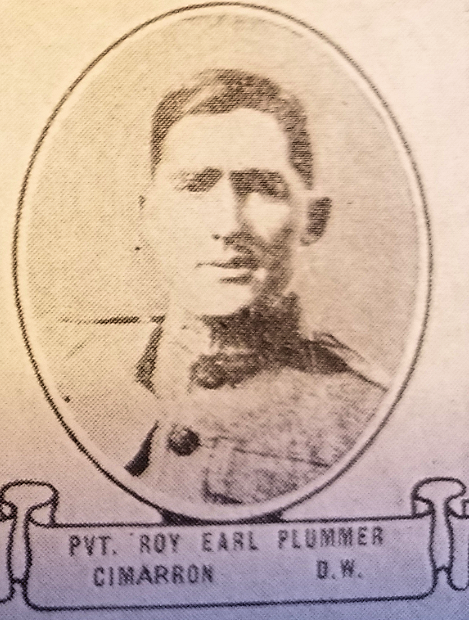
PVT Roy Earl Plummer
Co. C 140th INF - 35th DIV
April 25, 1894 - Nov. 3, 1918

PVT Roy E. Plummer

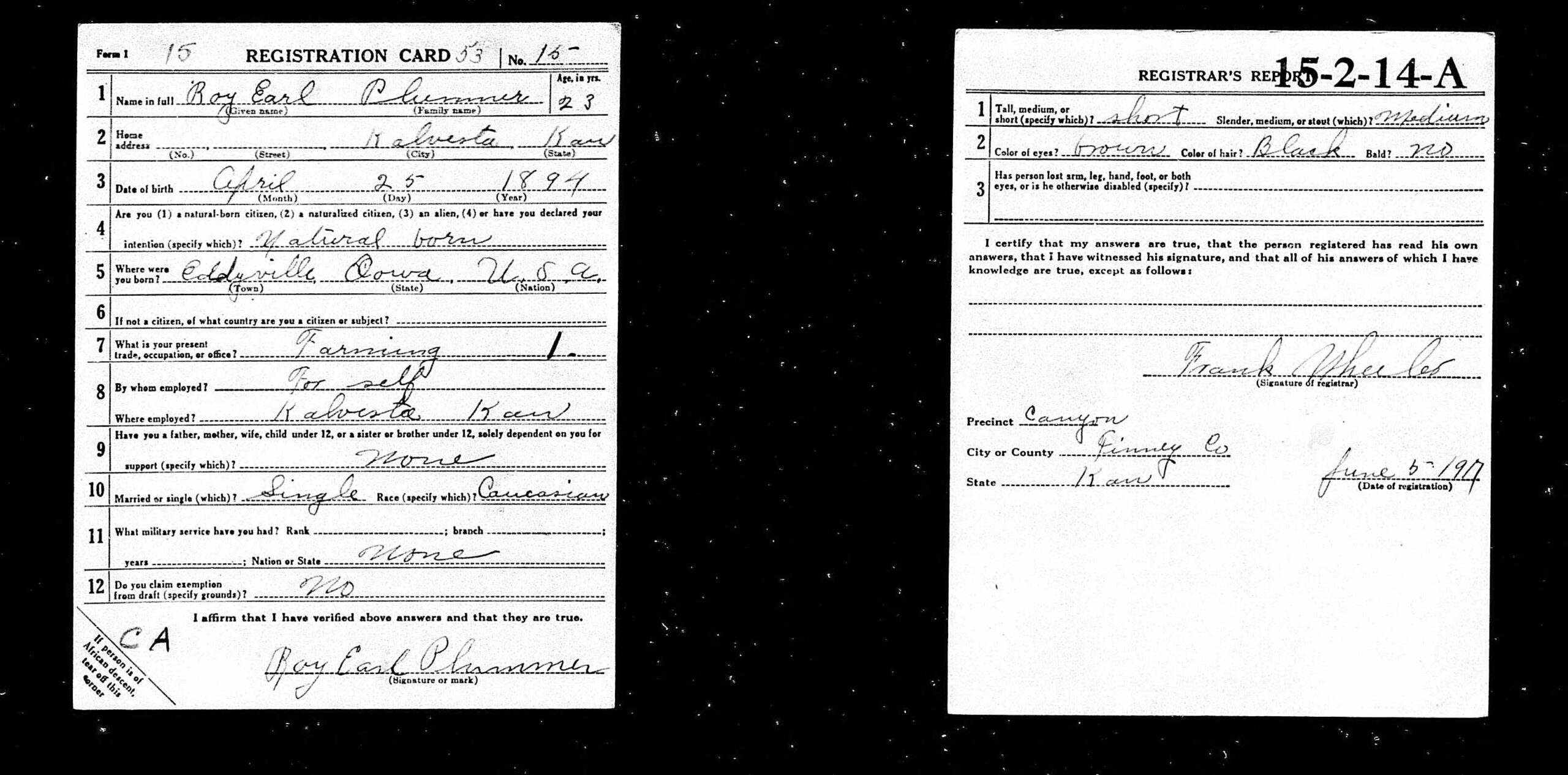
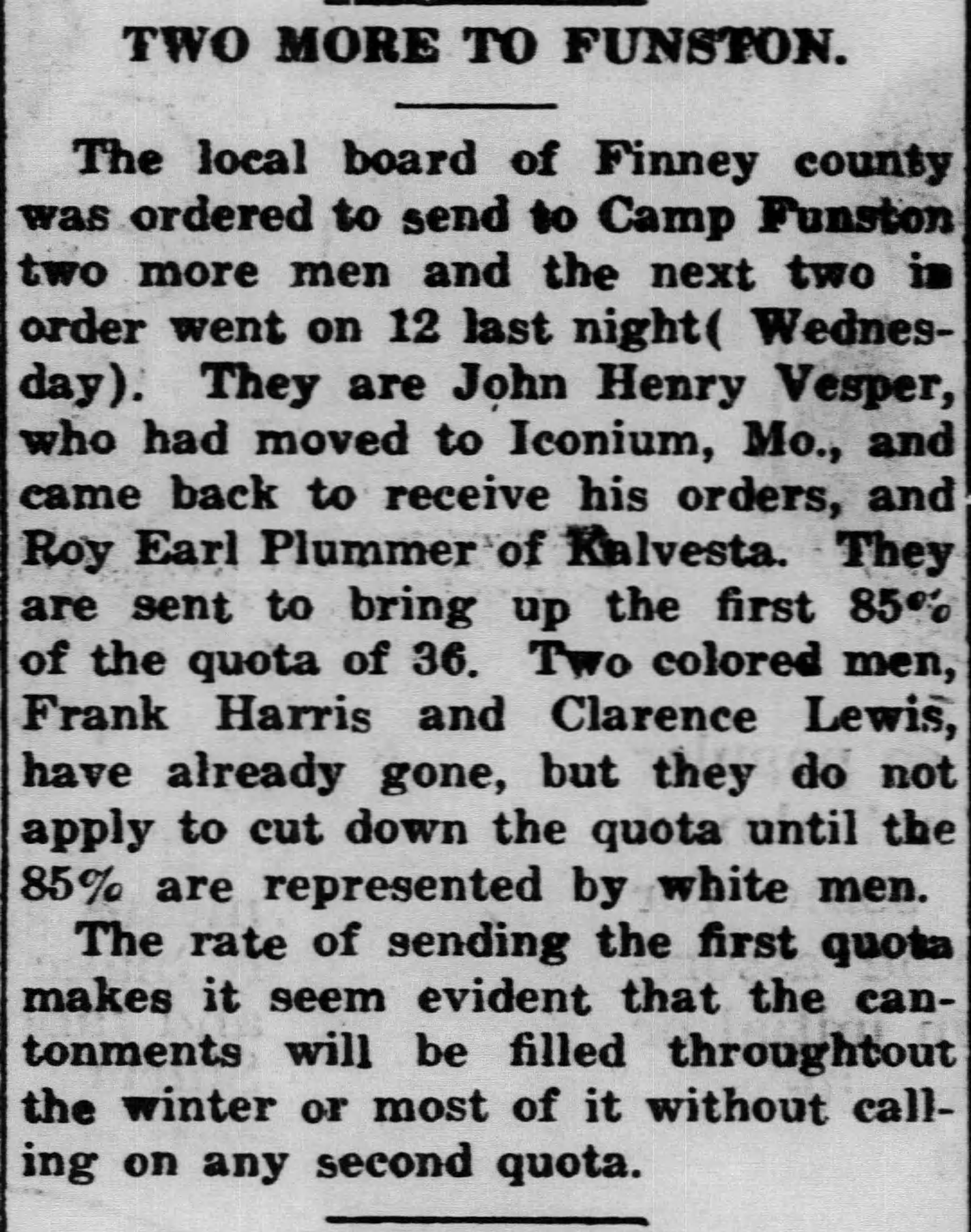
Roy Earl Plummer was born on April 25, 1894, in Iowa, his father, Sanford, was 34 and his mother, Nancy, was 29. He moved a few times during his lifetime. He lived in Columbia, Iowa, in 1900, Garfield, KS in 1915 and moved to Finney, Kansas, by 1917.  In December of 1917 Roy was called by the local draft board (see newspaper article in gallery).  At that time Roy lived in Kalvesta, Gray County, KS.  Also, in June of 1917, when Roy filled out his registration Card, he listed his address as Kalvesta.

But by early 1918, he found himself far from home, in uniform, training with the U.S. Army’s Company C, 140th Infantry Regiment, part of the 35th Division, a division built from the National Guards of Kansas and Missouri

After months of preparation, his unit crossed the Atlantic to join the American Expeditionary Forces in France. The 140th Infantry saw heavy action, first in the Vosges Mountains and later in the brutal fighting of the Meuse-Argonne Offensive—America’s largest and bloodiest operation of the war. It was there, in the midst of shellfire and trench lines, that Private Roy Earl Plummer was wounded.

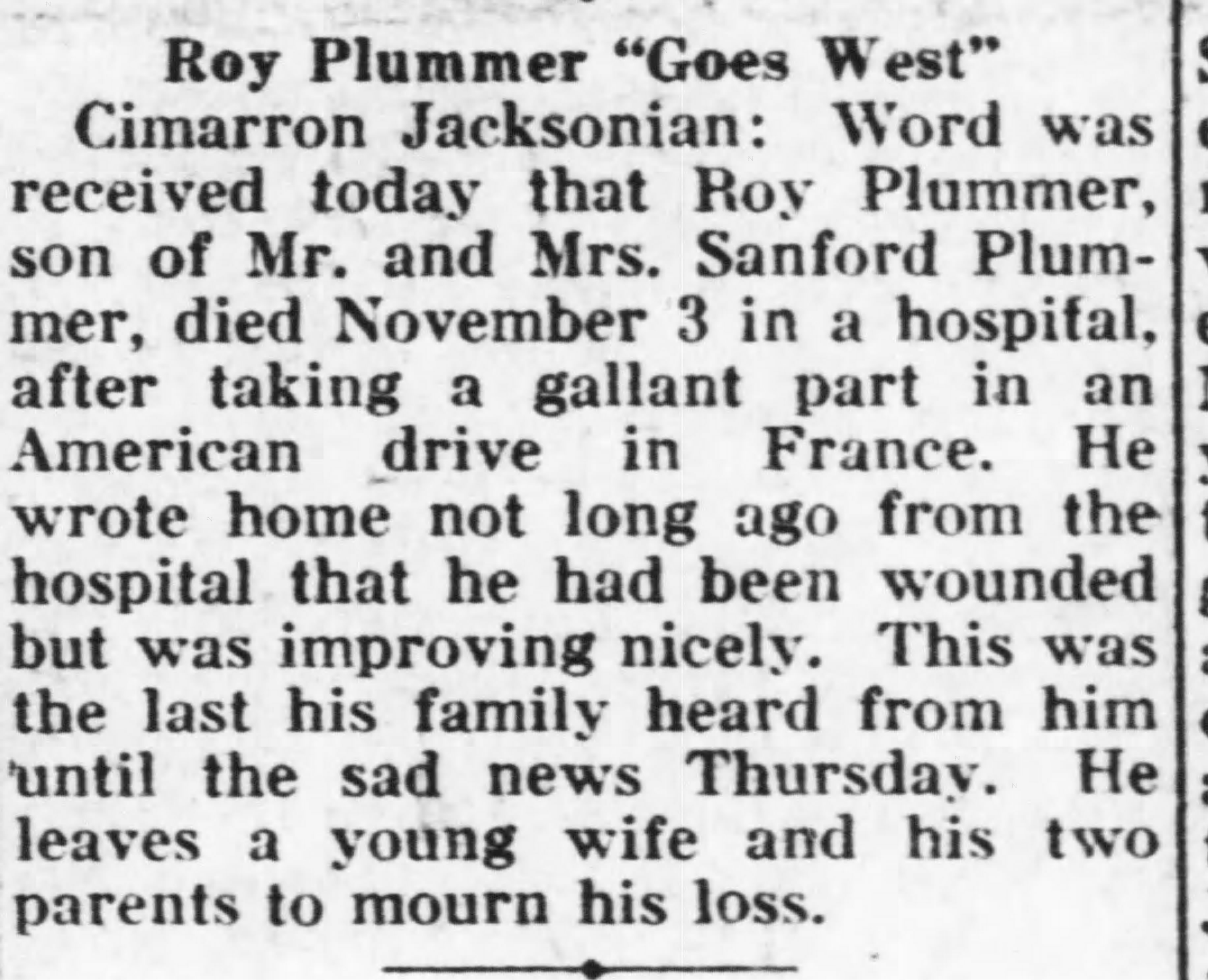
In late September 1918, he wrote home and told his family that he had been hurt, but reassured them he was healing and hoped to be back on his feet soon.

Weeks later, a telegram arrived with heartbreaking news. Private Roy Earl Plummer had died in a hospital in France on November 3, 1918—just eight days before the Armistice would silence the guns across Europe. He was only 24 years old.  He is buried in Cimarron, KS.

At the time of his passing, the 140th Infantry had been pulled from the front lines and was holding a quiet sector near Sommedieue, not far from Verdun. The regiment had endured terrible fighting, and now its surviving soldiers focused on patrols, defense, and regrouping.

A Brief Review Of The U.S. Army, Company C of the 140th Infantry Regiment

Company C of the 140th Infantry Regiment, part of the 70th Infantry Brigade within the 35th Infantry Division, played a significant role in World War I. This division was primarily composed of National Guard units from Missouri and Kansas.
Formation and Training
The 140th Infantry Regiment was formed in October 1917 through the consolidation of the 3rd and 6th Missouri Infantry Regiments. Company C was recruited from St. Joseph, Missouri. The regiment trained at Camp Doniphan, Oklahoma, adjacent to Fort Sill, where they underwent extensive preparation before deployment to Europe.
Deployment to France
In the spring of 1918, the 35th Division, including the 140th Infantry, was deployed to France. Upon arrival, they received additional training under British supervision. The regiment first saw combat in the Gérardmer sector of the Vosges Mountains in July 1918, conducting raids and patrols against German positions.
Meuse-Argonne Offensive
The 140th Infantry Regiment participated in the Meuse-Argonne Offensive, one of the largest operations of the American Expeditionary Forces. Beginning on September 26, 1918, the regiment advanced through challenging terrain and faced fierce resistance. Despite initial successes, the division encountered difficulties due to inadequate communication and coordination, leading to disorganization and heavy casualties. The 35th Division was relieved from the front lines on October 1, 1918.  
Post-Offensive Activities and Demobilization
After being withdrawn from the Meuse-Argonne front, the 140th Infantry Regiment was assigned to the Sommedieue sector, where they conducted defensive operations until the Armistice on November 11, 1918. The regiment returned to the United States aboard the USS Nansemond, arriving at Newport News, Virginia, on April 18, 1919. They were demobilized at Fort Riley, Kansas, on May 12, 1919.
Legacy
Company C, along with the rest of the 140th Infantry Regiment, demonstrated courage and resilience throughout their service in World War I. Their contributions are commemorated through various historical records and memorials, preserving the legacy of their service for future generations.