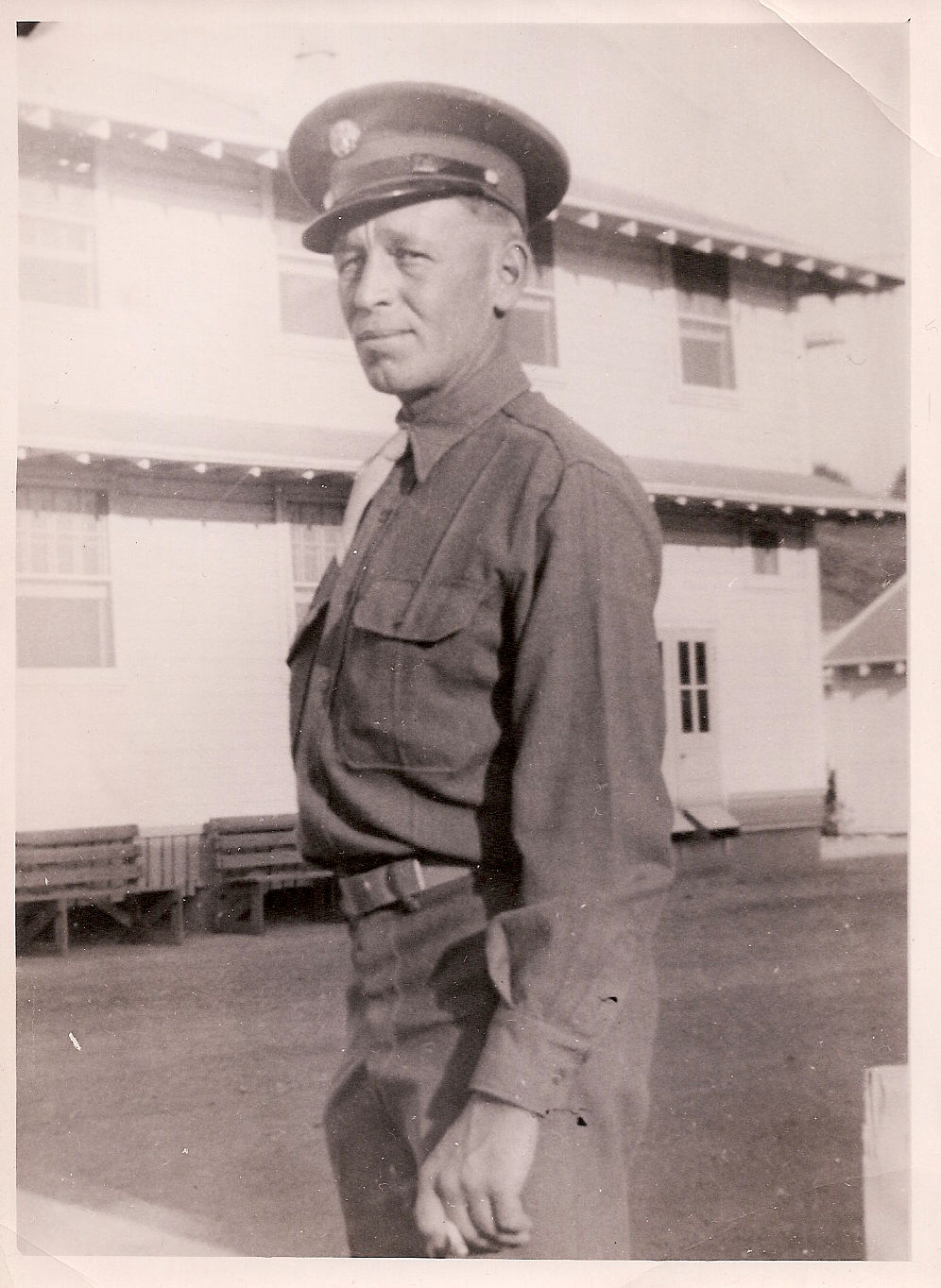
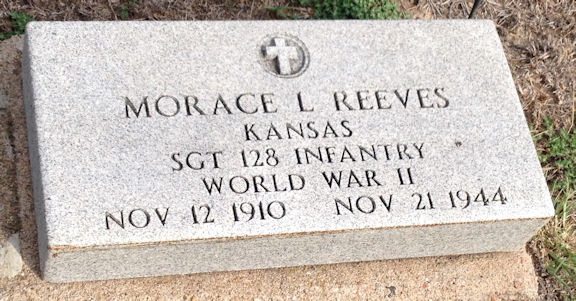
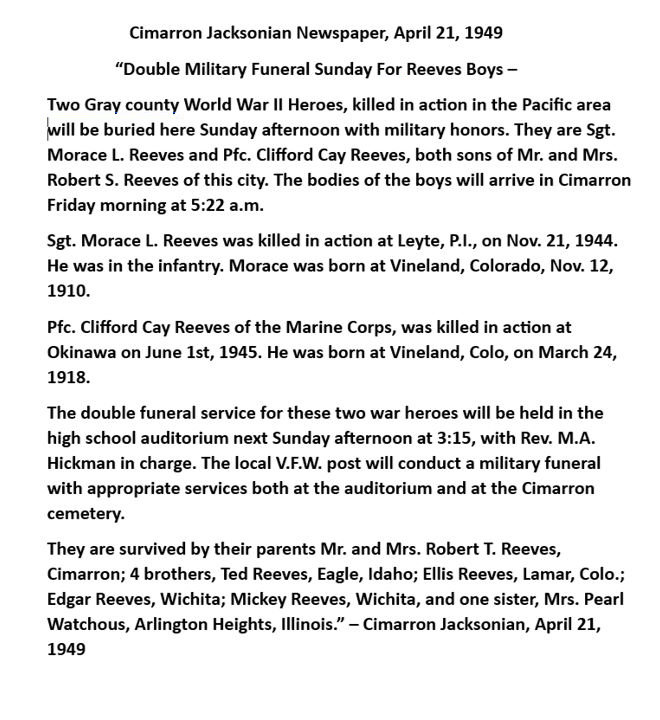
Morace L. Reeves was born on November 12, 1910, in Meade County, Kansas. At the time of his birth, his father, Robert, was 33, and his mother, Pearl, was 25. He was the fourth of seven children in the Reeves family, who had homesteaded in Meade County in 1905. In 1921, the family moved to Cimarron, where they established and operated a blacksmith shop that became a well-known fixture in the community for over two decades.
Morace attended school in Cimarron beginning at age eleven, though he did not complete his formal education. Much of his youth was spent working on the family farm and helping his father in the blacksmith shop.
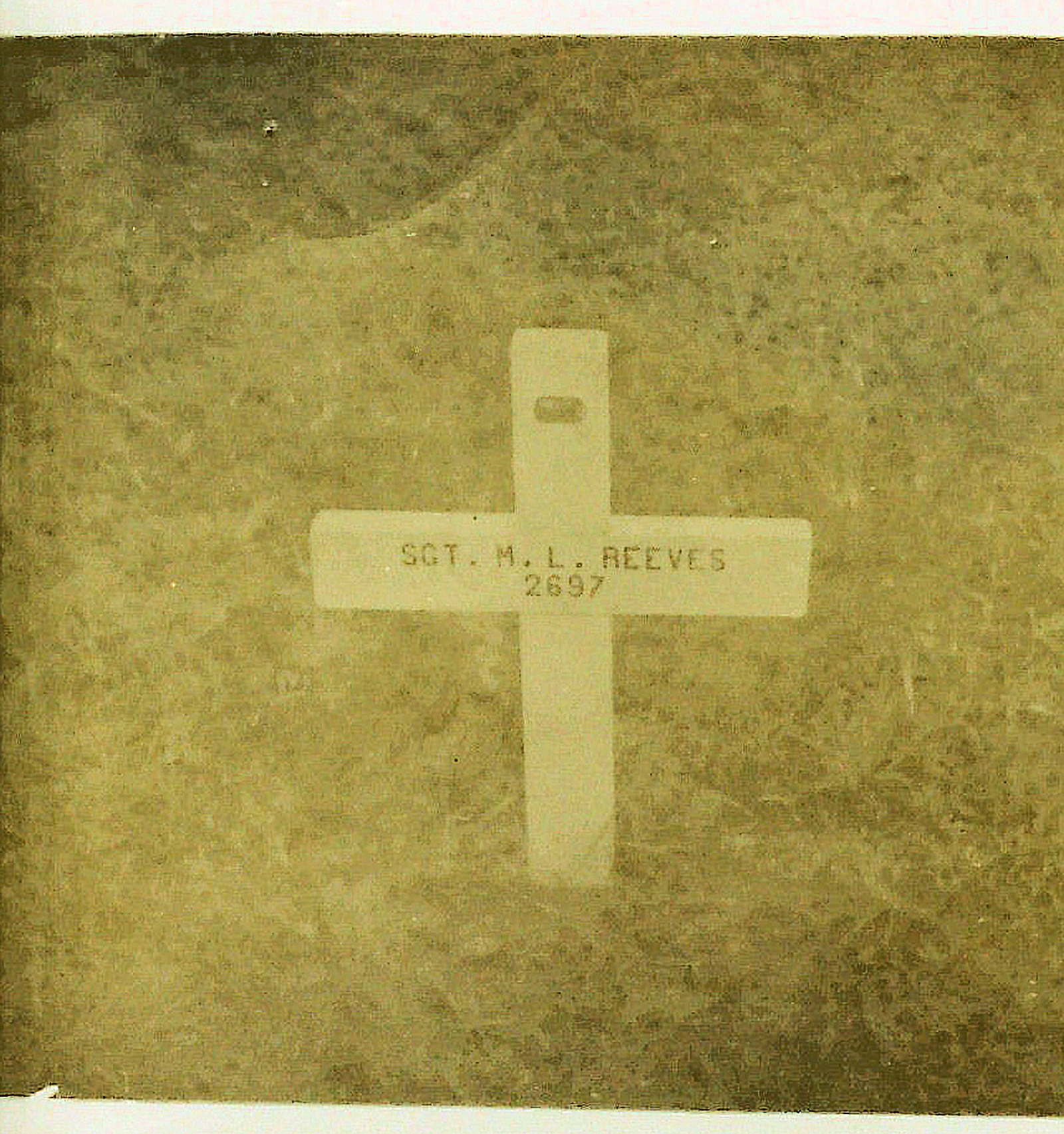
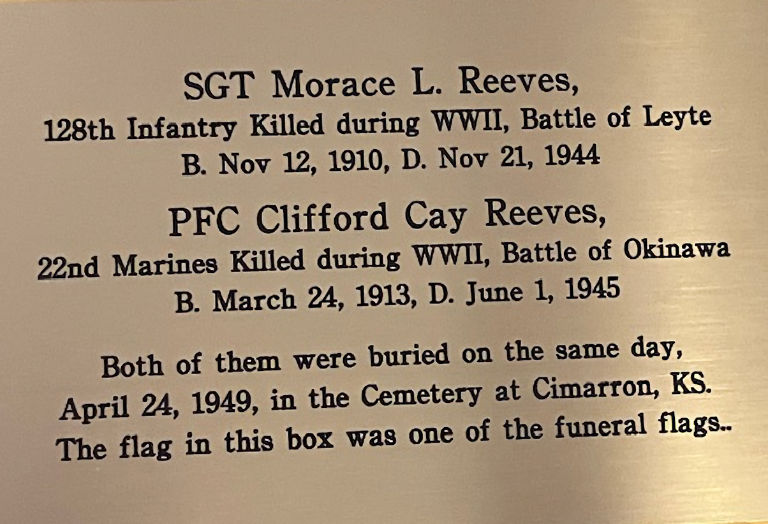
During World War II, SGT Morace L. Reeves served with the 128th Infantry Regiment. He was killed in action during the Battle of Leyte in the Philippines on November 21, 1944—the 32nd day of the campaign. He was 34 years old.
Tragically, his younger brother, PFC Clifford Reeves, was also killed in action during the war. Clifford died on June 1, 1945, during the Battle of Okinawa at the age of 32.
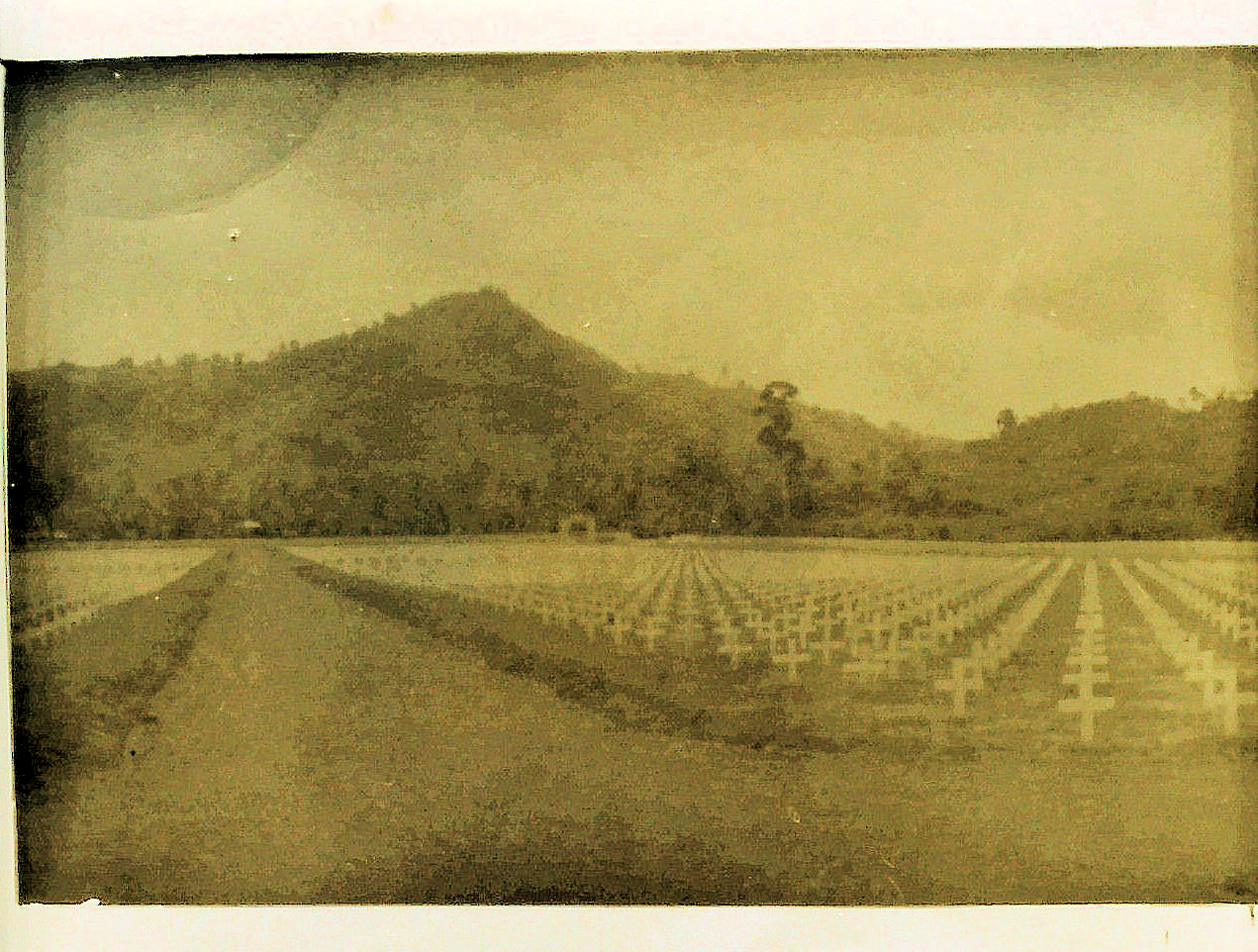
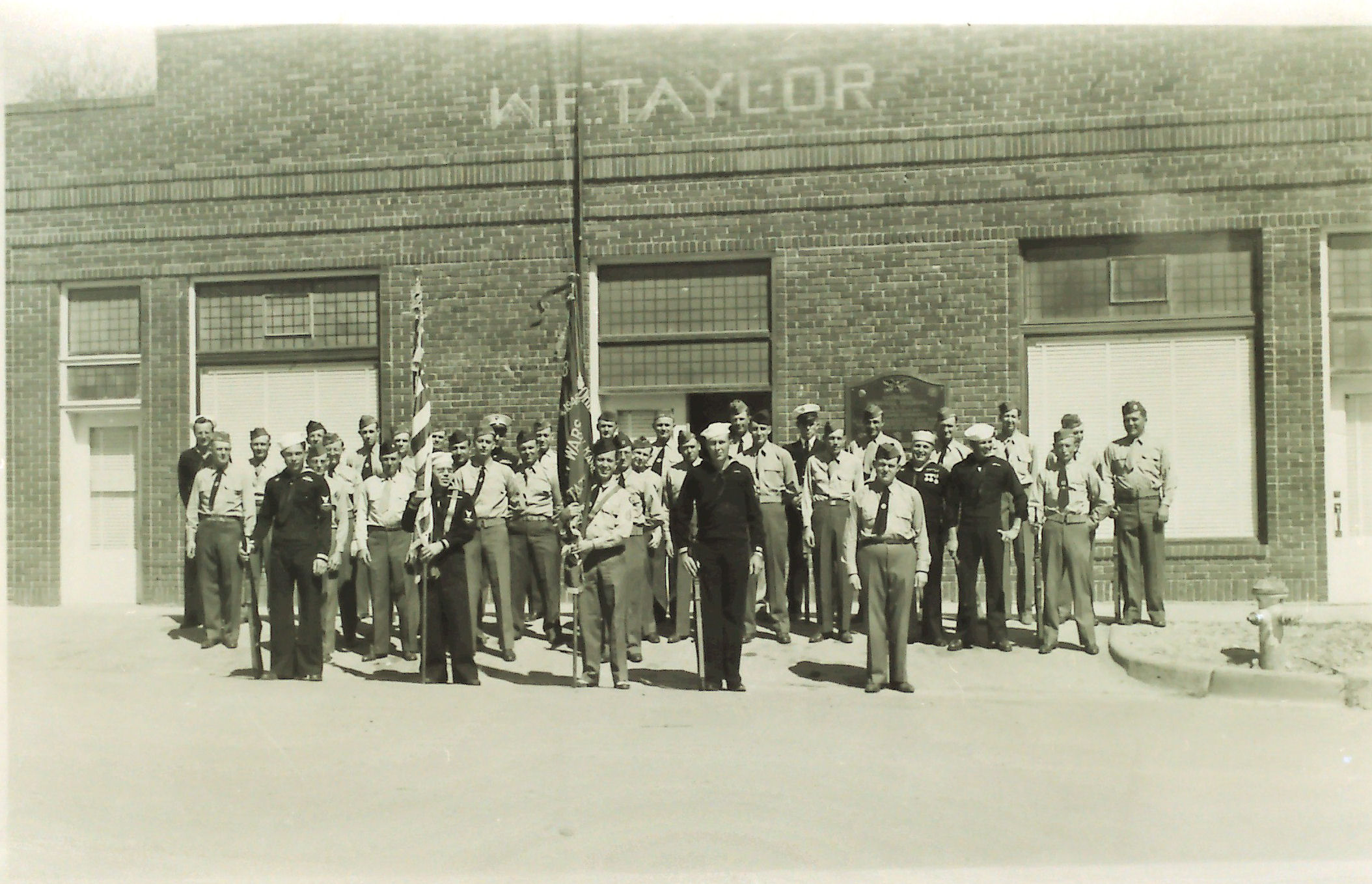
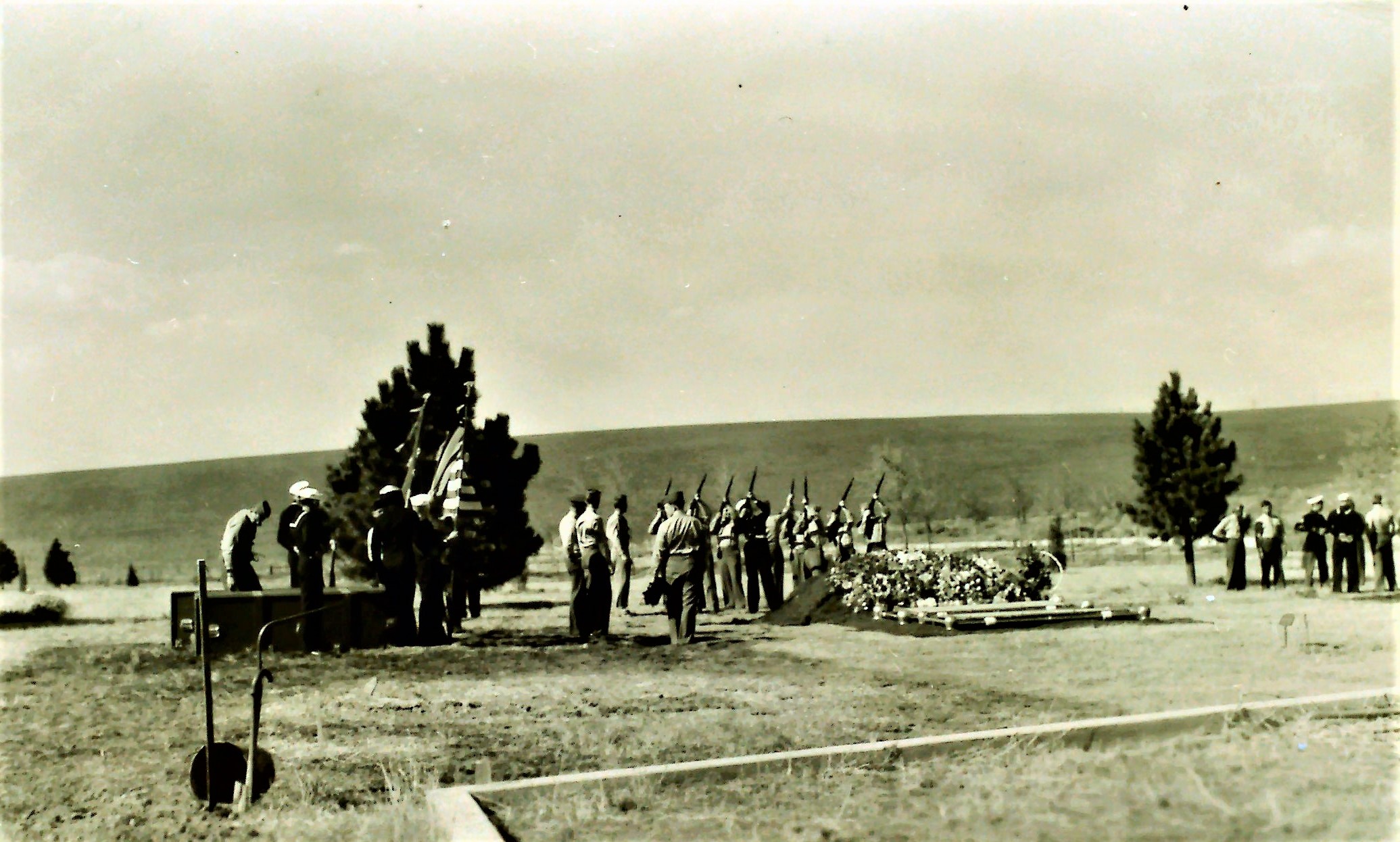
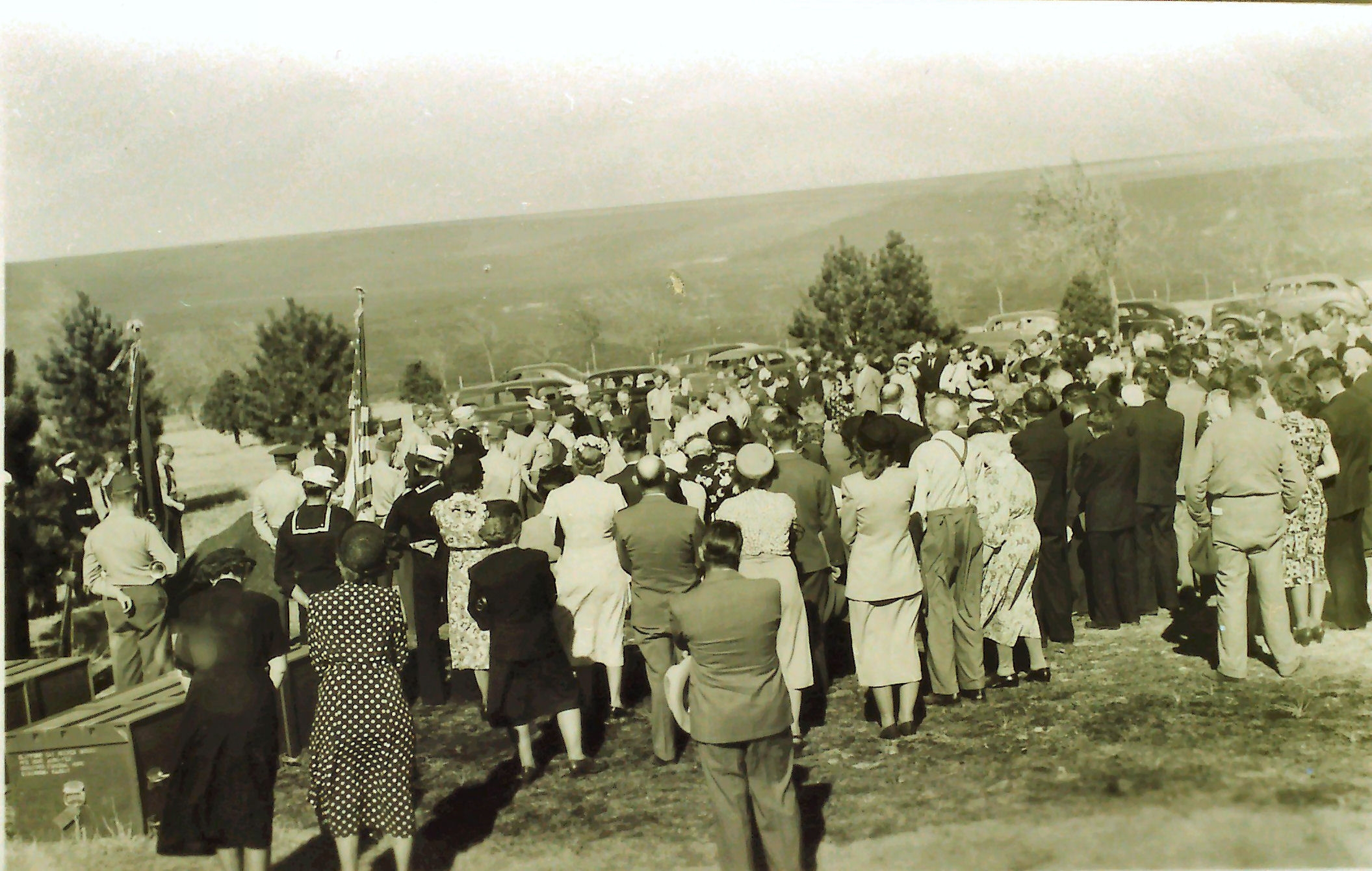
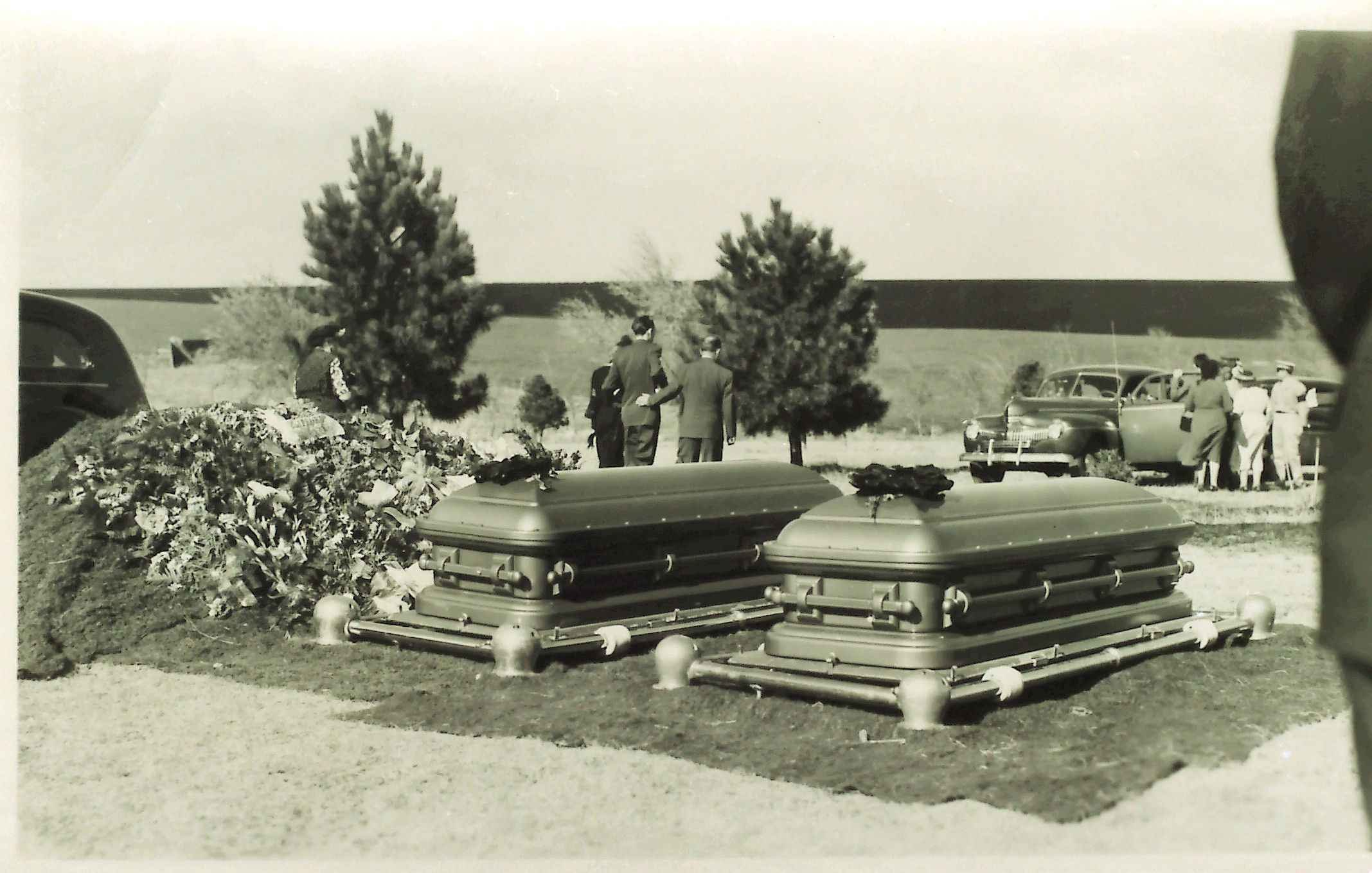
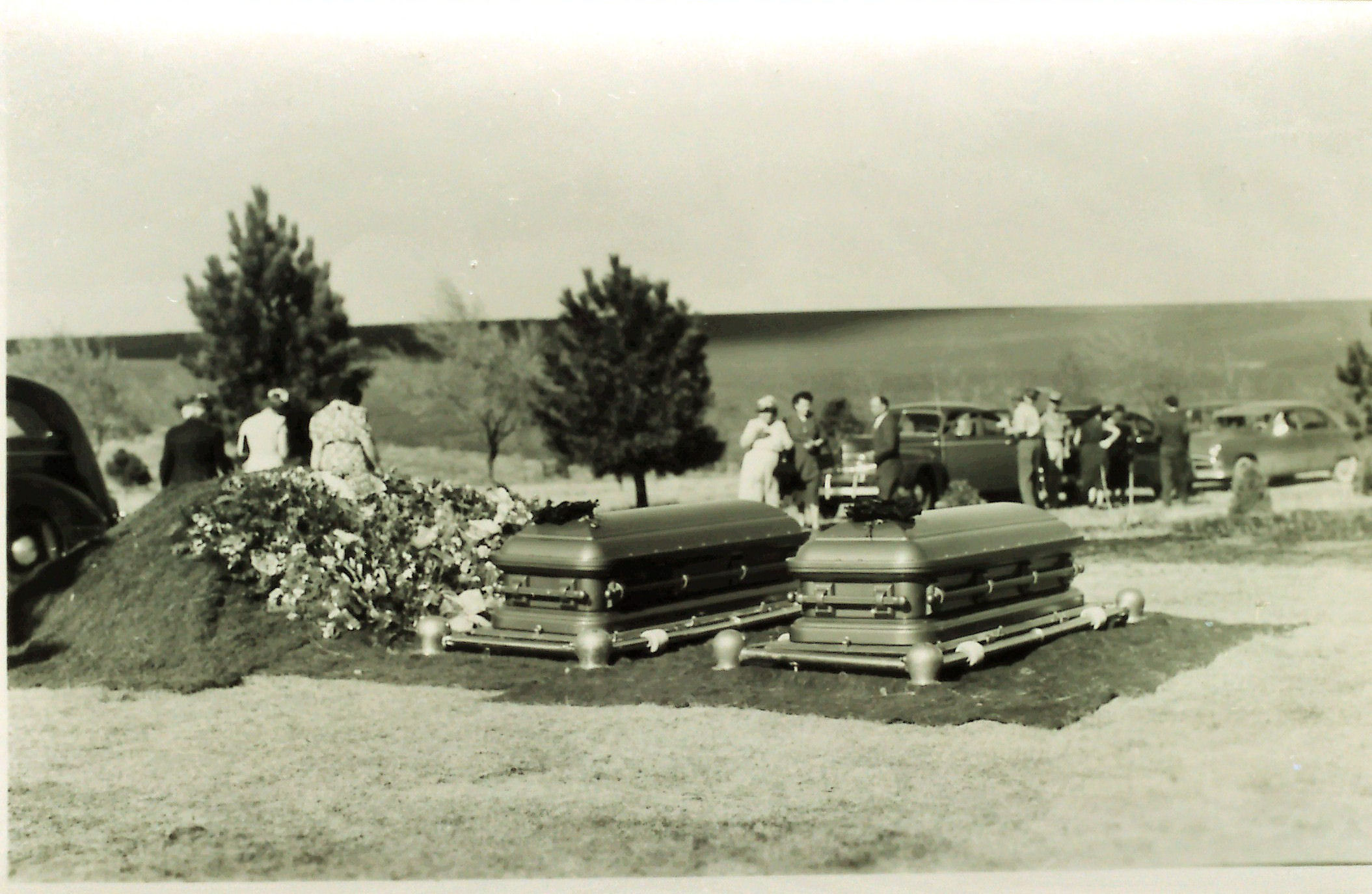
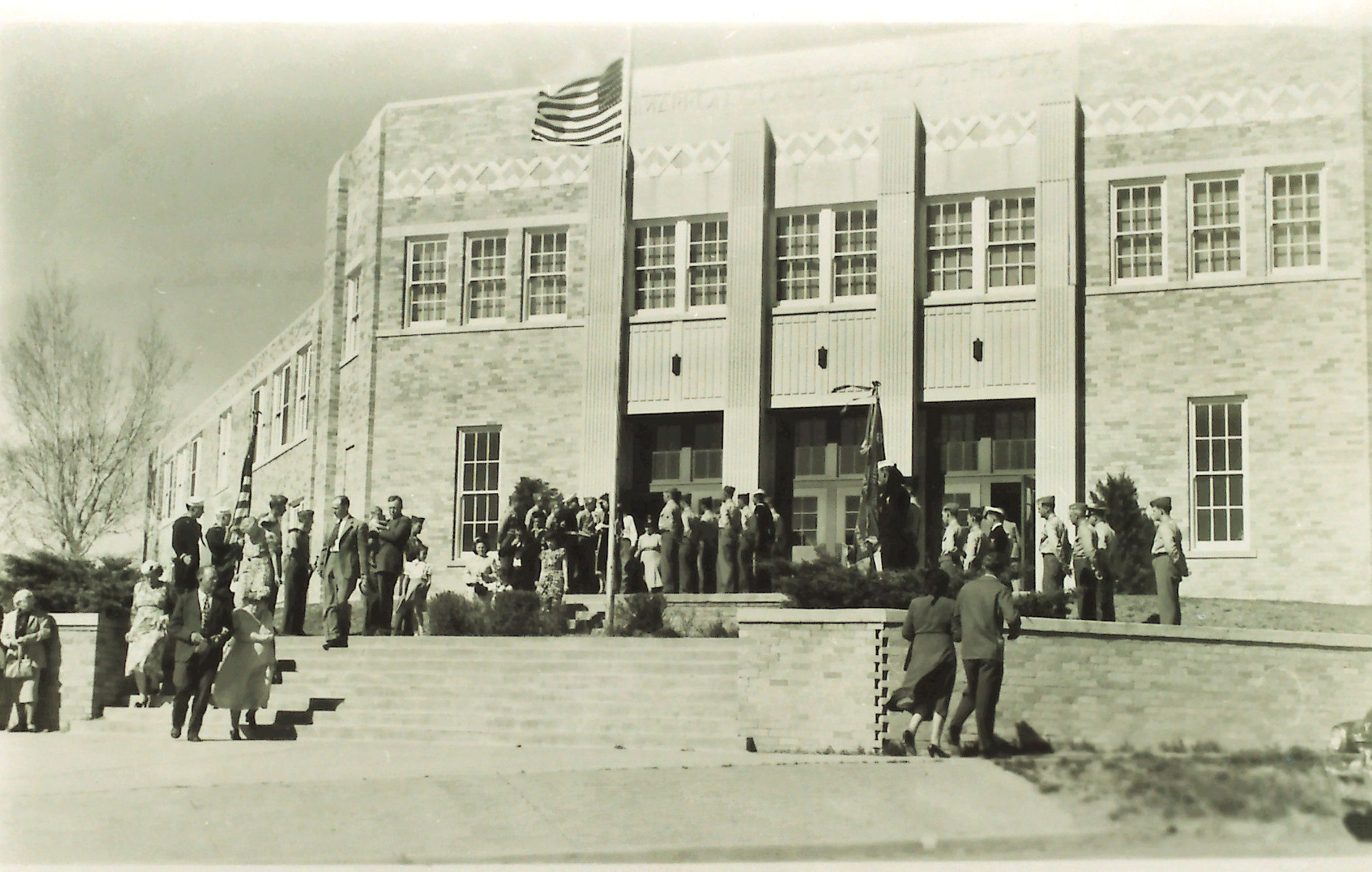
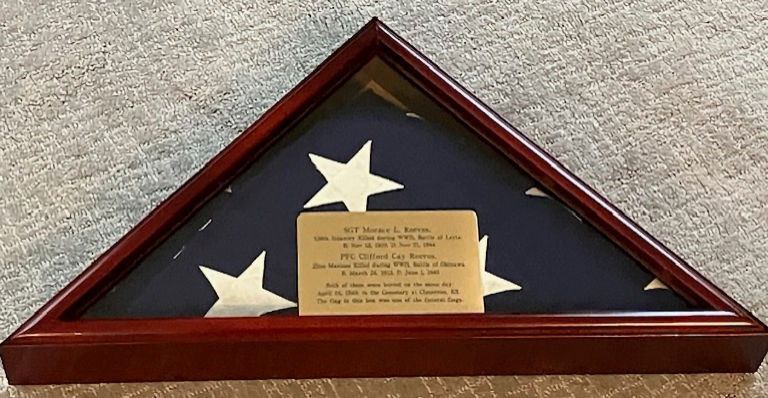
Initially buried in U.S. military cemeteries in the Pacific, both brothers were returned home aboard the USNS Dalton Victory in 1949. (The USNS Dalton Victory participated in major operations including the Battles of Leyte, Iwo Jima, and Okinawa.) On April 24 of that year, Morace and Clifford were laid to rest side by side in the Cimarron Cemetery.
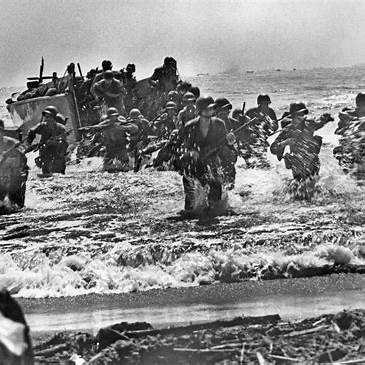
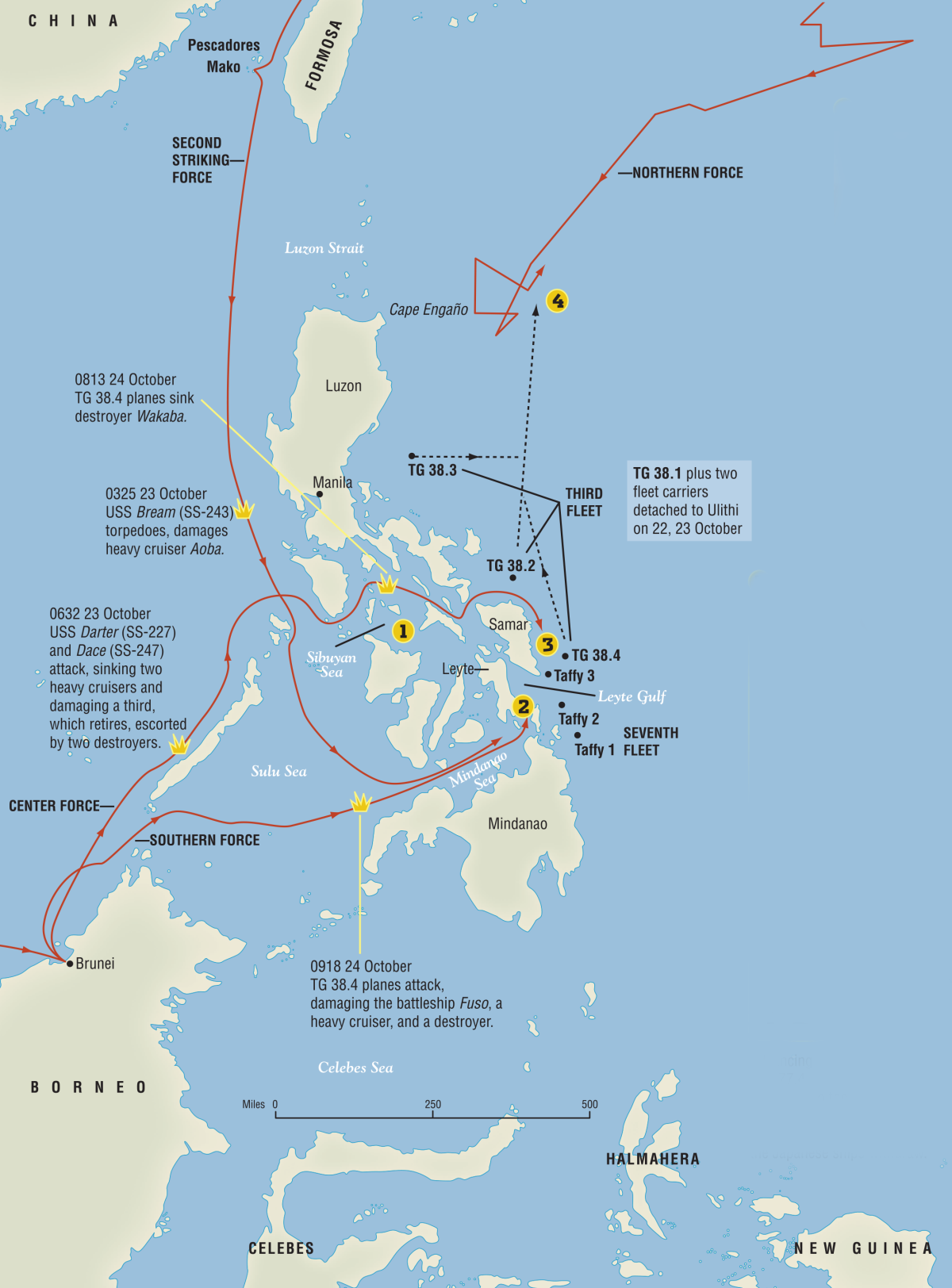
On November 21, 1944, the 128th Infantry Regiment, part of the 32nd Infantry Division (“Red Arrow Division”) of the U.S. Army, was engaged in intense combat operations during the Battle of Leyte in the Philippines.
Activities on November 21, 1944:
The 128th Infantry Regiment was heavily involved in the offensive to clear the central mountain ranges of Leyte, particularly focusing on the rugged terrain and well-defended Japanese positions in the area of Breakneck Ridge (also called “Hill 1525”), northeast of Ormoc Valley.
On this date, the regiment was attempting to dislodge Japanese defenders who had fortified high ground and narrow ridges using pillboxes, spider holes, and artillery. The fighting was extremely difficult due to: Steep, jungle-covered terrain, Heavy rains and mud and Determined Japanese resistance
November 21st marked the 32nd day of the campaign on Leyte. Casualties were high on both sides. Progress was slow, measured in yards gained per day.
U.S. forces were pushing toward Limon and Ormoc, critical points for controlling the western side of Leyte. The 128th was part of the main thrust to isolate and destroy Japanese units resisting the Allied advance in the interior.
This was the kind of intense combat in which SGT Morace L. Reeves lost his life.