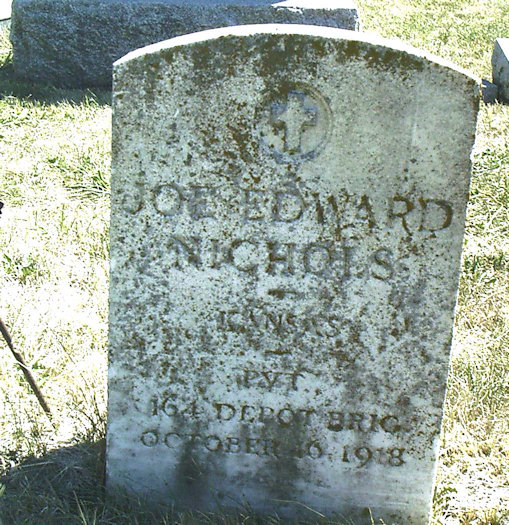
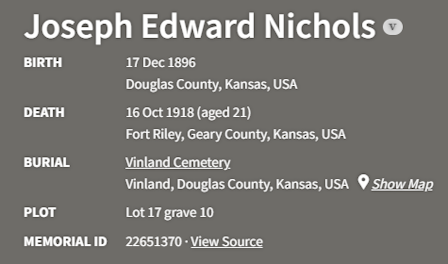
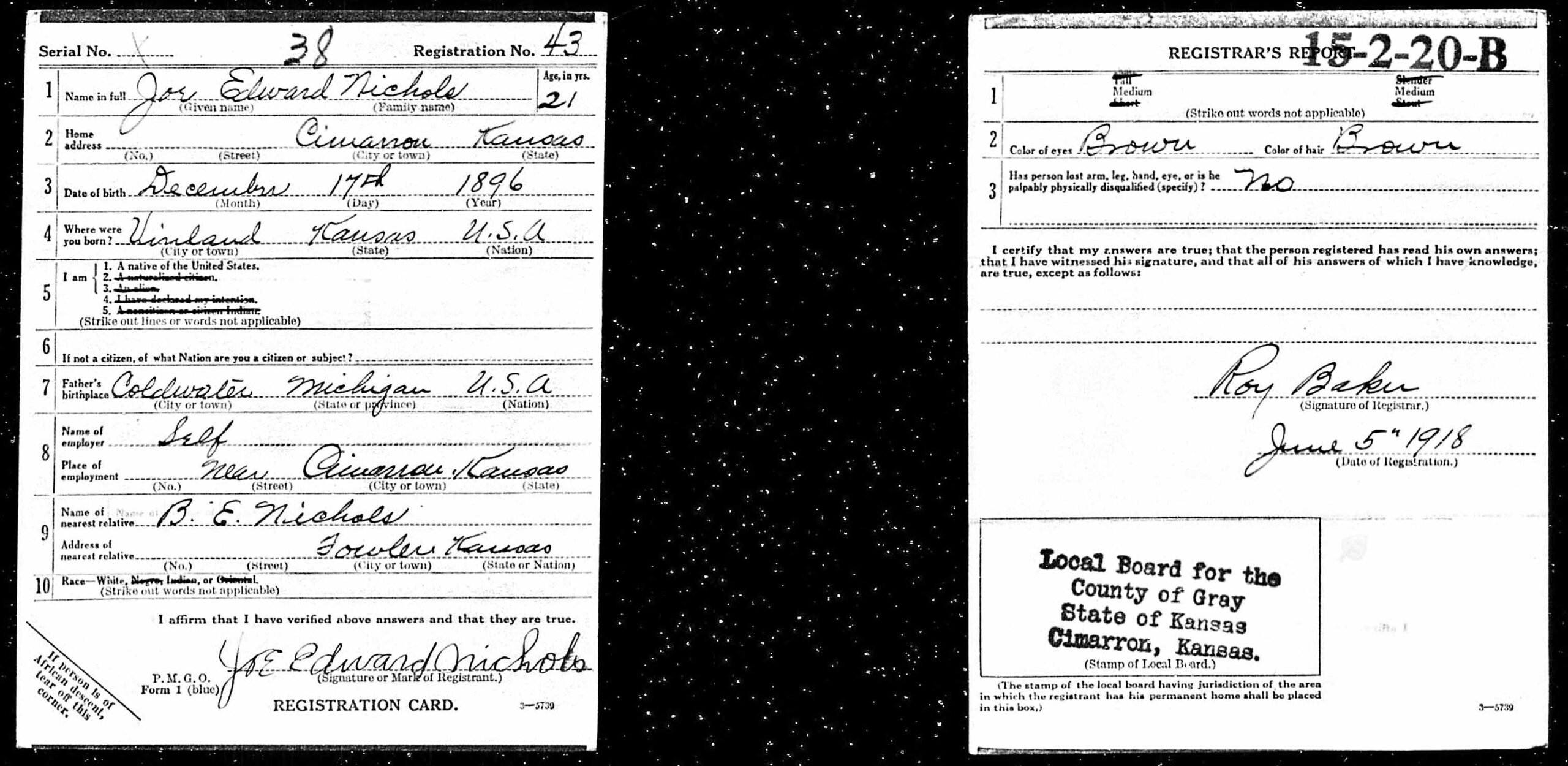
Joseph “Joe” Edward Nichols was born on December 17, 1896. At that time his father, Burton, was 28 and his mother, Kate, was 22. He had four brothers. Joe was the oldest.
A number of addresses are found for Joseph “Joe” Edward Nichols, Including: Palmyra, Kansas, in 1900, Marion, Kansas, on March 1, 1905, and Hess, Kansas, in 1910. By 1918, when Joe filled out his military registration card, he was living in Cimarron, KS. He died on October 16, 1918, in Fort Riley, Kansas, at the age of 21, He is buried in Vinland Cemetery, Vinland, Kansas
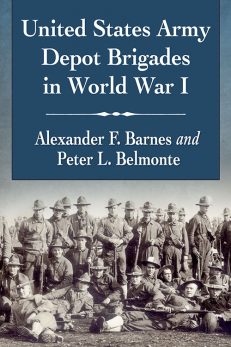
PVT Joe Nichols joined the Army and was assigned to the 164th Depot Brigade. Stationed at Camp Funston, Kansas—a major training camp located on the grounds of Fort Riley—the brigade was integral in preparing troops for overseas deployment.
In March 1918, Camp Funston reported some of the earliest known cases of the influenza pandemic that would later be called the “Spanish Flu.”
According to a letter dated October 23, 1918, from Adjutant General Charles S. Huffman to Kansas Governor Arthur Capper, approximately 14,500 cases of influenza and pneumonia were reported at Camp Funston, resulting in 871 deaths among the 65,000 soldiers stationed there. These numbers indicate that nearly one in four soldiers became ill, with a mortality rate of roughly 6% among those infected. Private Joe Nichols, who died at Fort Riley on October 18, 1918, was almost certainly among the victims of this devastating epidemic.
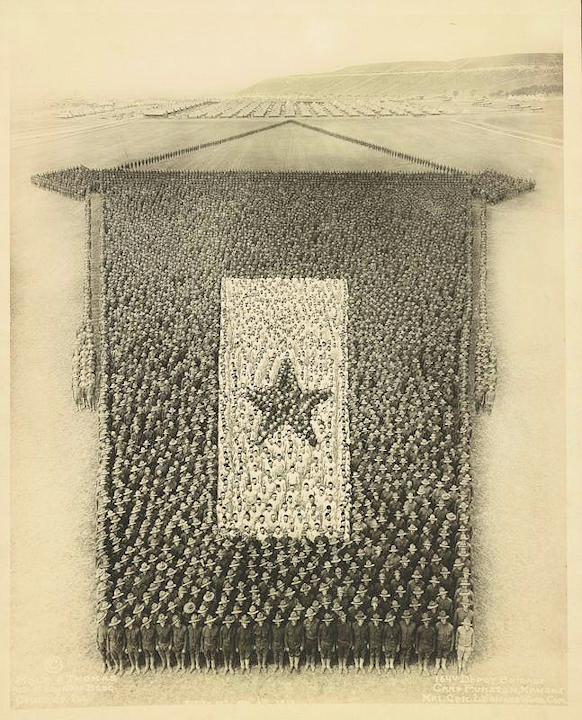
In search of some eye-catching imagery to boost morale surrounding US involvement in WWI, the US military commissioned the English-born photographer Arthur Mole and his assistant John Thomas to make a series of extraordinary group portraits. Between 1915 and 1921, with the dutiful help of thousands of servicemen and staff from various US military camps, the duo produced around thirty of the highly patriotic images, which Mole labelled “living photographs”.
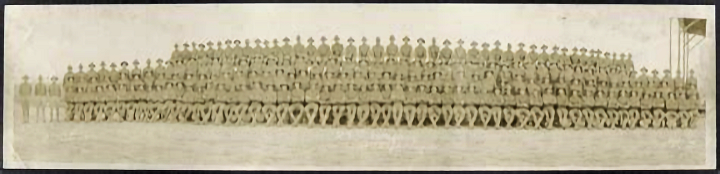
It is quite likely that PVT Joe Nichols is in the picture of the U.S. Armed Forces service flag, ca. 1918. (See photos)