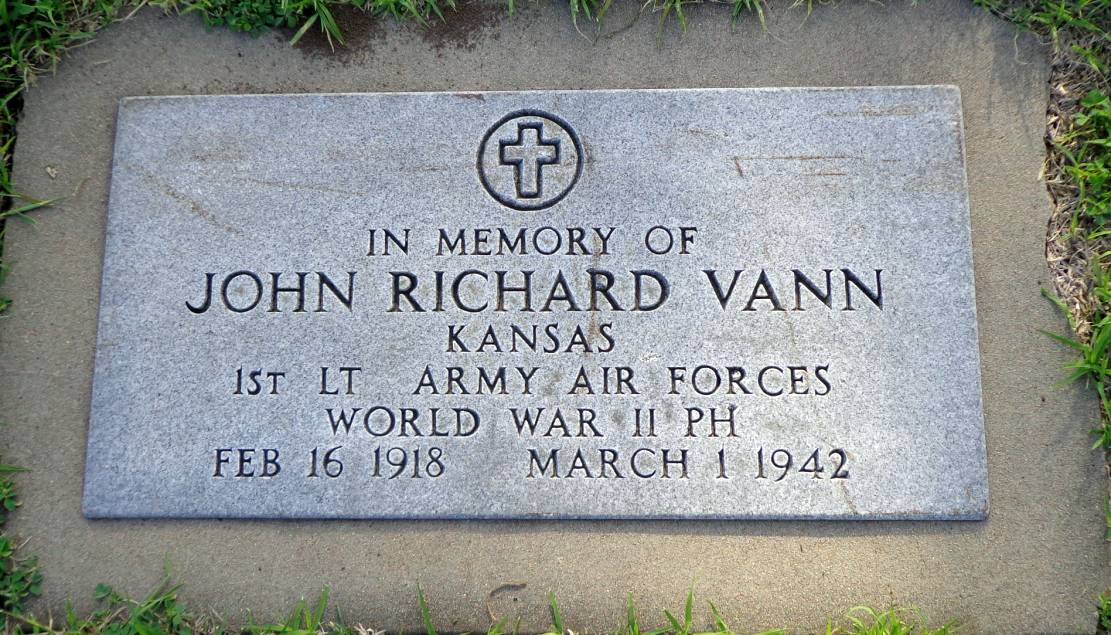
John Richard Vann was born on Feb. 16, 1918, to parents Richard and Jossephine (Reinert) Vann. In 1930, the family lived in Dodge City, KS and resided at 1106, 6th Avenue. The Vanns had a second child, Leon Francis born October 29, 1931, in Dodge City.
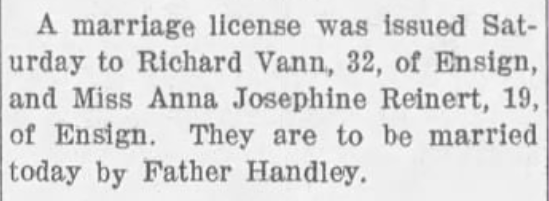
Although the family lived in Dodge City for a number of years they had ties to Ensign. According to an article in the Dodge City newspaper on Feb 21, 1916, when the Vanns applied for a marriage license they indicated they were from Ensign. A number of documents indicate the both John and his father worked in Ensign for a number of years and the 1940 Census indicates the family was living in Ensign at that time.
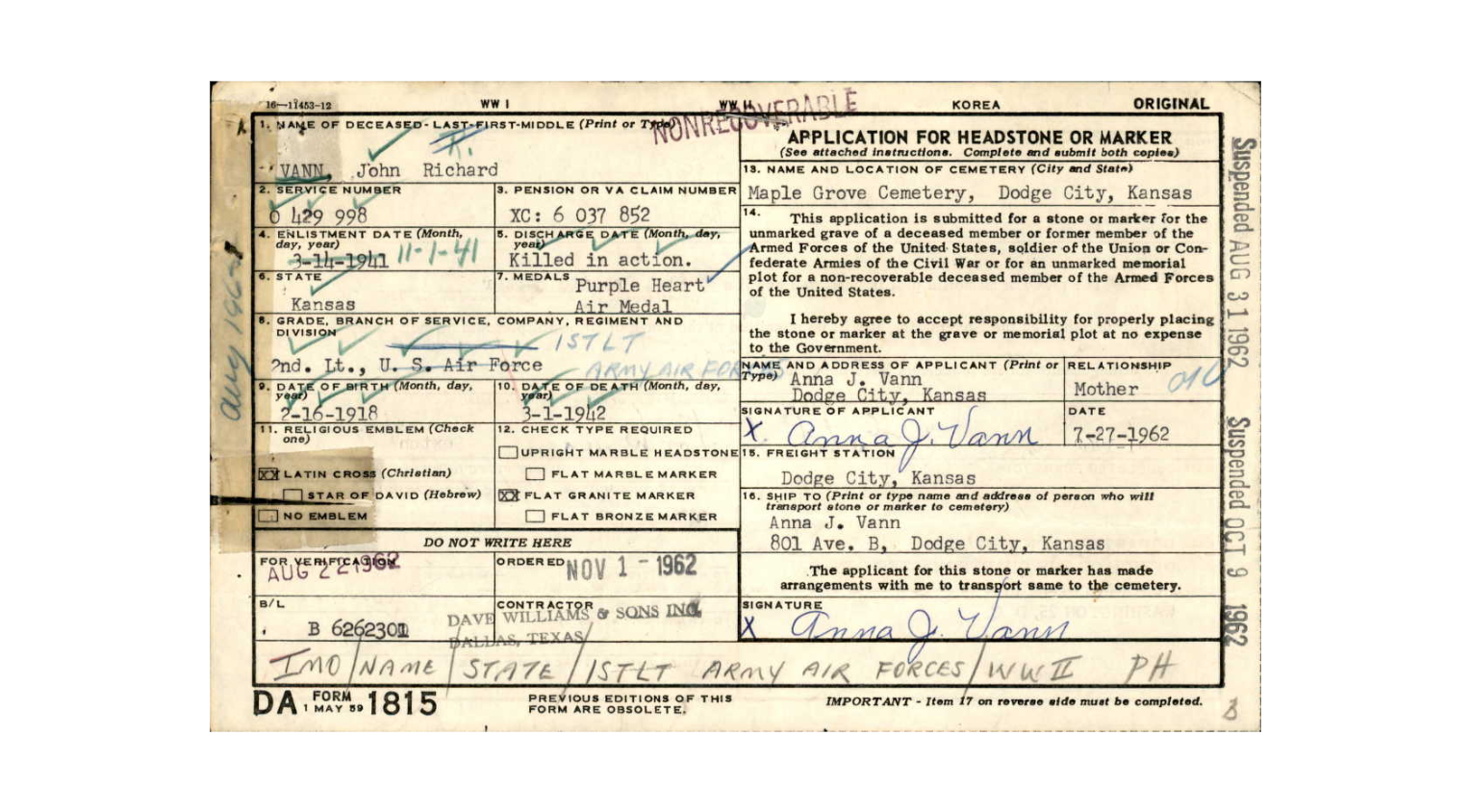
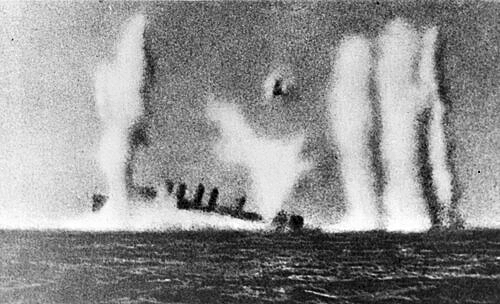
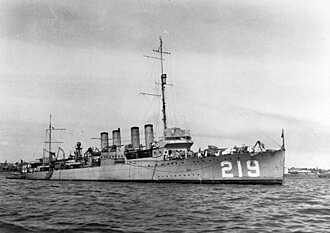
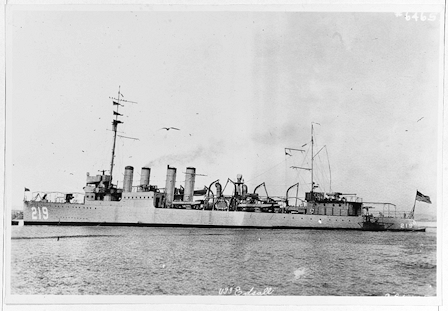
John enlisted in the Army Air Force on 11 – 1 – 1941. 2nd Lt. John R. Vann Service (#0-429998) was trained as a pilot and assigned to the 13th Pursuit Squadron, 53rd Pursuit Group, Army Air Corps. The Group was being transferred to the Panama Canal aboard the USS EDSALL (DD-219) when it was sunk by the Japanese on March 1, 1942. John R. Vann is listed under Finding Of Death in the 1946 Army and Army Air Forces Personnel Casualty List for Gray County, Kansas.
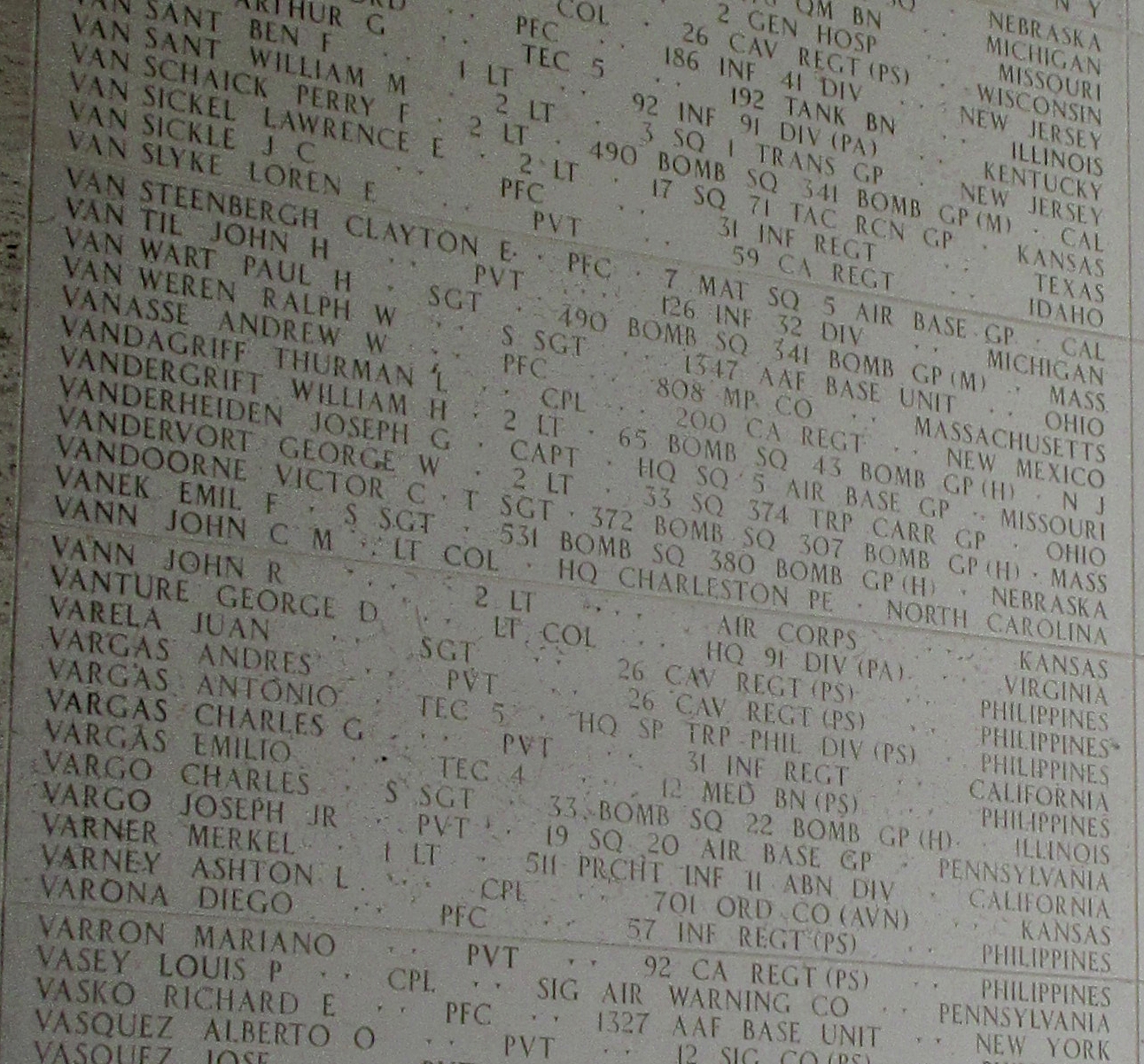
John’s name is also listed on the Tablets of the Missing at the U.S. Military Cemetery and Memorial in Manila, Philippines. He is included among a staggering 36,282 names of Americans who lost their lives in the South Pacific during WWII and have no known resting place.
The ship, USS Edsall was just found in late 2023. It is resting 18,000 feet down, in the Indian Ocean, Southwest of Java.
The USS Edsall was a Clemson-class destroyer commissioned on November 26, 1920. By 1942, she was part of the U.S. Navy’s Asiatic Fleet. On March 1, 1942, while operating in the Indian Ocean south of Java, the Edsall encountered a powerful Japanese naval force.
Final Engagement
Around 4 p.m., the Edsall engaged the Japanese fleet, which included battleships and cruisers. Despite being outgunned, the destroyer maneuvered evasively, deploying smokescreens and returning fire. Japanese forces fired over 1,400 shells at the Edsall, but she managed to avoid significant damage for more than an hour. Eventually, Japanese carrier-based dive bombers struck the ship, leading to her sinking at approximately 5:31 p.m..
Casualties and Aftermath
Of the 185 U.S. Navy personnel and 31 U.S. Army Air Forces pilots aboard, nearly all perished. A few survivors were captured by Japanese forces but were later executed. The Edsall’s valiant stand earned her the nickname “Dancing Mouse” from the Japanese due to her agile maneuvers during the battle.
Discovery of the Wreck
In late 2023, the Royal Australian Navy discovered the wreck of the USS Edsall approximately 200 miles east of Christmas Island, at a depth of 18,000 feet. The discovery was announced on November 11, 2024, coinciding with Remembrance Day in Australia. The wreck was found using advanced robotic systems during a hydrographic survey mission.