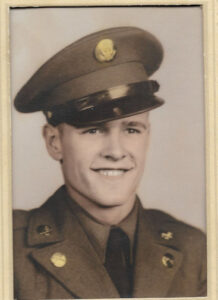
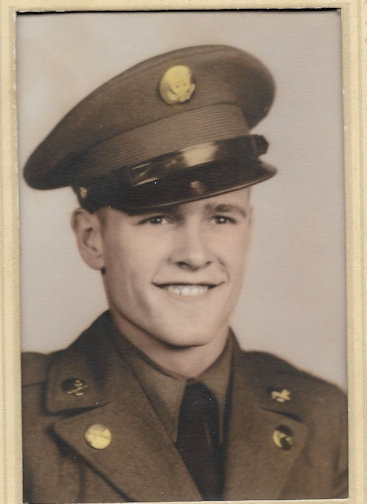
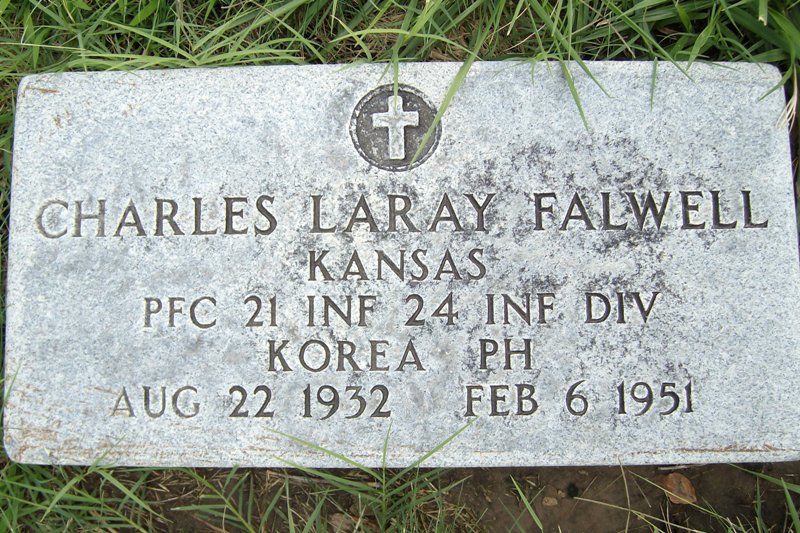
Charles Laray Falwell was born on August 22, 1932. At the time of his birth, his father, Charles, was 43 years old, and his mother, Florence, was 26. He had one older brother and two older sisters. In 1934, the family welcomed a fifth child, a younger son.
The Falwell family resided in Gray County, Kansas, from 1927 to 1931, during which time three of the children were born in Ingalls. In the years that followed, the family settled in Pierceville, Kansas. Charles’s maternal grandparents, Clarence and Mary Markel, had moved to Gray County as early as 1920, establishing deep roots in the community.
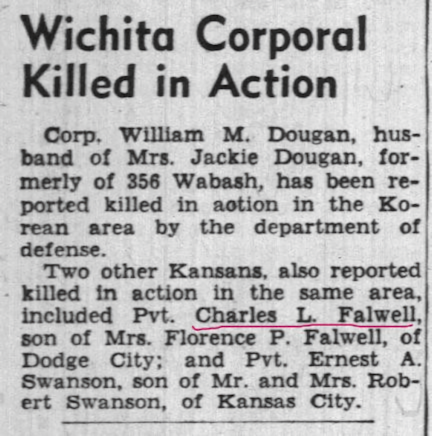
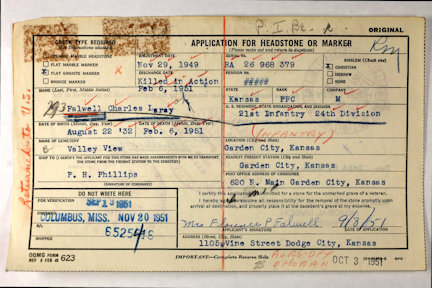
Private First Class (PFC) Charles L. Falwell served honorably in the United States Army during the Korean War. He was assigned to the 21st Infantry Regiment of the 24th Infantry Division and participated in active combat operations in South Korea. On February 6, 1951, PFC Falwell was killed in action while engaging enemy forces. He was just 18 years old. He is buried with honor in Garden City, Kansas.
Though official records of his military decorations are limited, it is likely that PFC Falwell received the Purple Heart for wounds sustained in combat. He may also have been awarded the following honors in recognition of his service:
Combat Infantryman Badge
Korean Service Medal
United Nations Service Medal
National Defense Service Medal
Republic of Korea War Service Medal
PFC Falwell is also remembered and honored at the Korean War Veterans Memorial in Washington, D.C., where his sacrifice, along with that of thousands of others, is solemnly commemorated.