
Elden I. Wright

SGT Elden l. Wright
U.S. Army Air Force WWII
Oct. 18, 1914 - Nov. 9, 1942

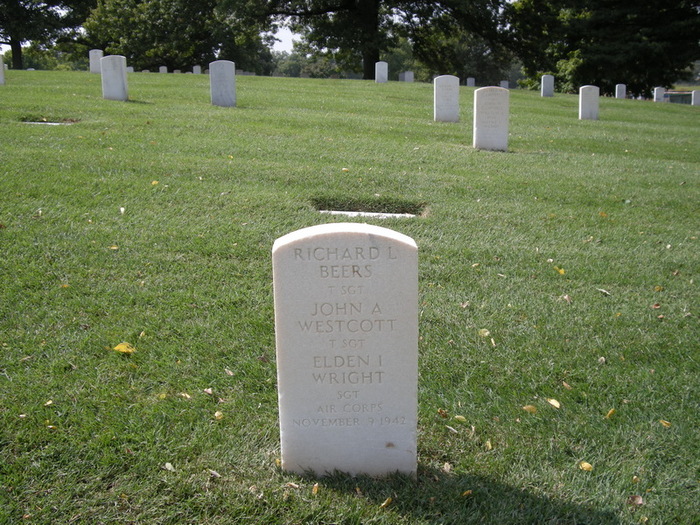
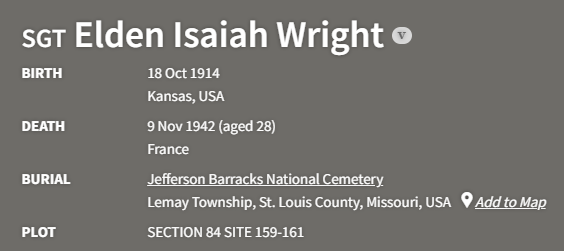
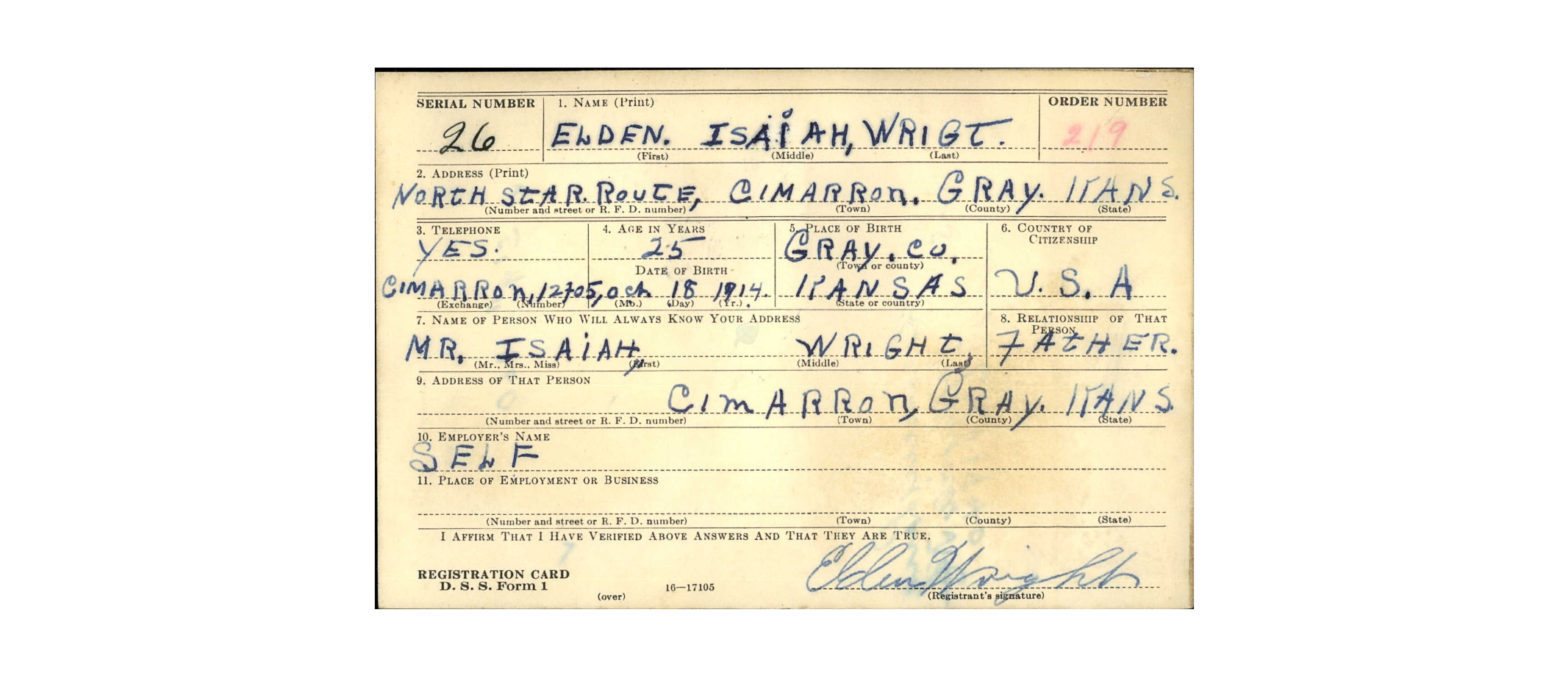
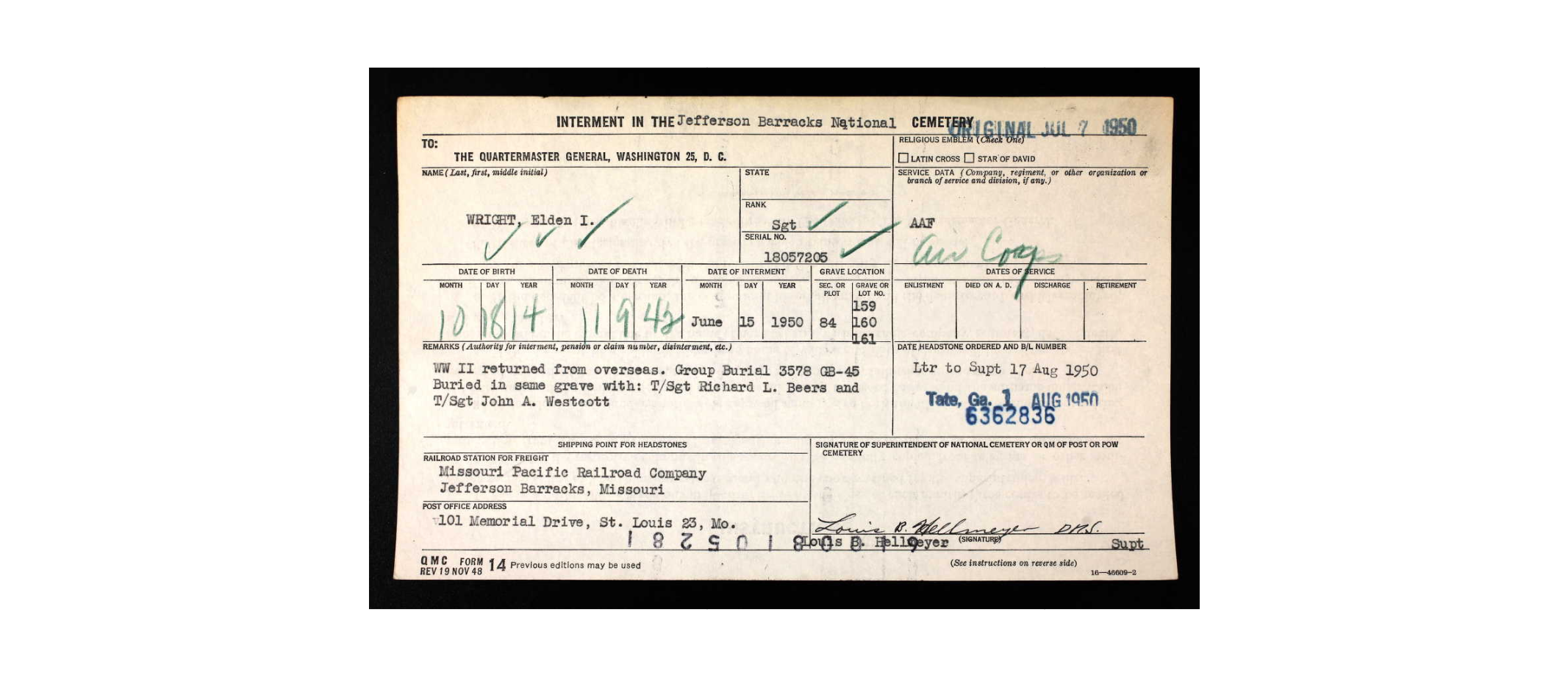
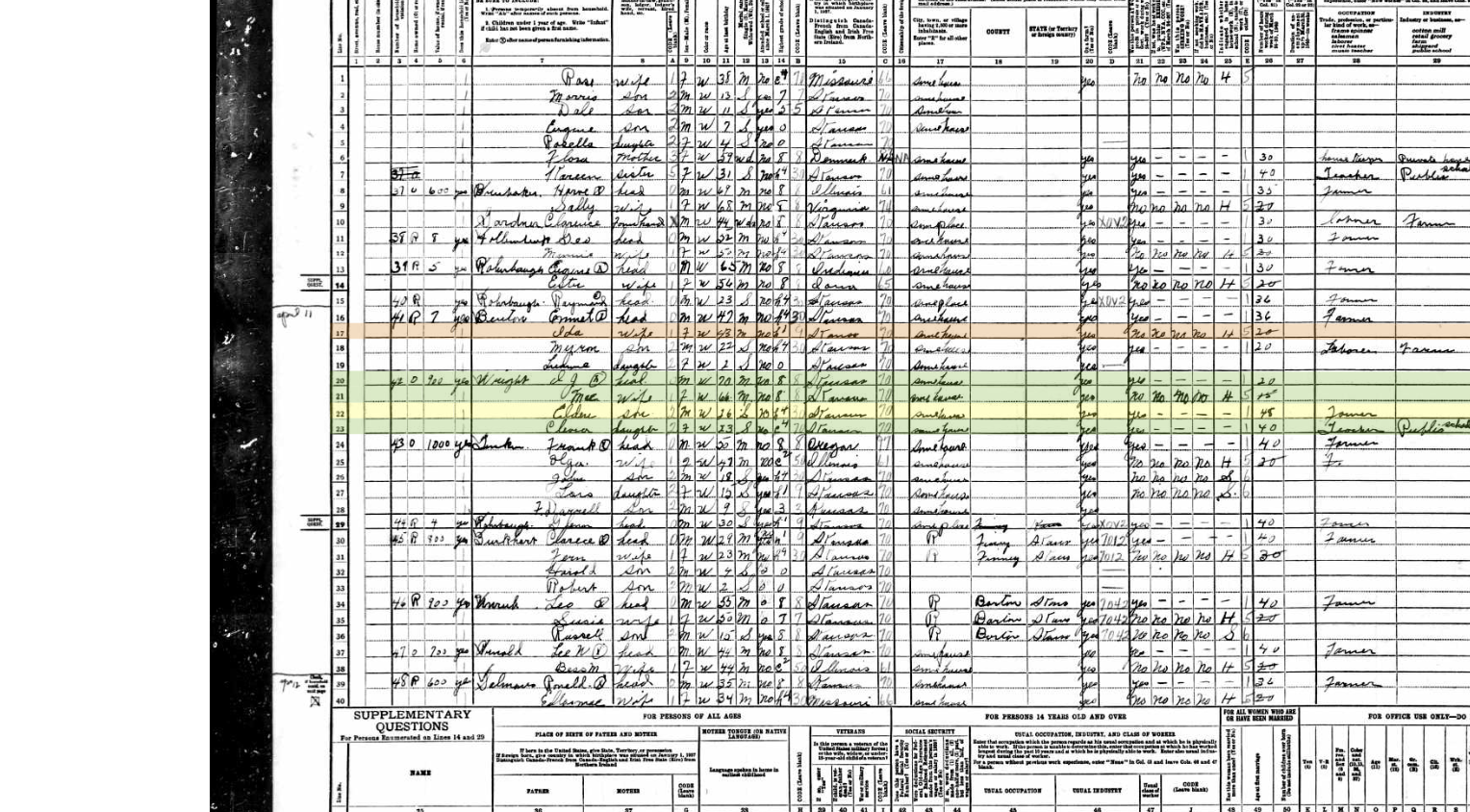
Elden Isaiah Wright was the second of three children born to Isiah and Mae Wright in 1914. He would be an only son. In 1920, the Wright family lived in the small town of Foote, Gray County, Kansas. Their home was situated on a street within Foote Township. The family’s roots were firmly planted in Kansas, as both parents and all their children were born in the state. Elden attended school in Cimarron, KS and graduated with the class of 1932. He enlisted in the Army in October, 1941
Sergeant Elden Isaiah Wright was a B-17 waist gunner, assigned to 306th Bomber Group 423rd Bomb Squadron. The 306th Bomber Group (The Reich Wreckers) was stationed at Thurleigh, England. He was killed in action on 9 November 1942 on a mission to bomb the U-Boat pens at St Nazaire, France, flying aboard B-17F #41-24491 “Man O’War”.
His plane was shot down by anti-aircraft fire 5 miles northwest of St. Nazaire, France and all crew members were killed. He is buried in Jefferson Barracks National Cemetery in Lemay, St. Louis County, Missouri. He shares a headstone with two of his crewmates, Technical Sergeant Richard Beers and Technical Sergeant John Westcott. The information on the raid states that the crew was buried by the Germans in the cemetery of Escoublac-Cuy, France. None of them are listed there.
The crew KIA were:
1LT Loyal M Felts, O-366259, WA, Pilot
TSGT Richard L Beers, 13030895, PA, Flight Engineer/Top Turret Gunner
SGT George P Bogumill, 19078528, CA, Tail Gunner
SSGT Charles E Vonderlieth, 32218597, NY, Ball Turret Gunner
TSGT John A Westcott, 12042436, VA, Radio Operator
SGT Elden I Wright, 18057205, KS, Waist Gunner
A Brief Review of the U.S. Army Airforce In Europe During World War II
The United States Army Air Forces (USAAF) played a pivotal role in the European Theater of Operations (ETO) during World War II. Formed in 1941, the USAAF was tasked with providing aerial support to ground forces, conducting strategic bombing campaigns, and achieving air superiority.
Strategic Bombing and Air Superiority
The USAAF’s primary mission in Europe was strategic bombing to cripple Germany’s war production and morale. This effort was carried out primarily by the Eighth Air Force, based in England, and the Fifteenth Air Force, stationed in Italy. Flying B-17 Flying Fortresses, B-24 Liberators, and later B-29 Superfortresses, these units targeted factories, oil refineries, transportation hubs, and military installations.
The daylight bombing strategy, initially costly due to heavy German anti-aircraft fire and fighter attacks, became more effective with the introduction of long-range fighter escorts like the P-51 Mustang. By mid-1944, the USAAF had gained air superiority over Europe, drastically reducing German air resistance.
Tactical Air Support
In addition to strategic bombing, the Ninth Air Force focused on tactical air support for ground troops. Their missions included close air support, interdiction, and reconnaissance, especially vital during operations like D-Day (June 6, 1944) and the subsequent Allied push into France and Germany. The use of fighter-bombers like the P-47 Thunderbolt proved instrumental in disrupting German reinforcements and supply lines.
Major Campaigns and Achievements
Operation Pointblank (1943-1944): Aimed at destroying the German Air Force, this campaign significantly weakened the Luftwaffe, paving the way for the D-Day invasion.
D-Day and Beyond (1944-1945): The USAAF provided crucial air cover during the Normandy landings and subsequent breakout from the beachheads.
Strategic Bombing of Germany (1944-1945): Targeting industrial centers and cities, this campaign devastated German infrastructure, weakening the Nazi war effort.
Battle of the Bulge (1944-1945): Tactical air support from the USAAF was crucial in repelling the last major German offensive.