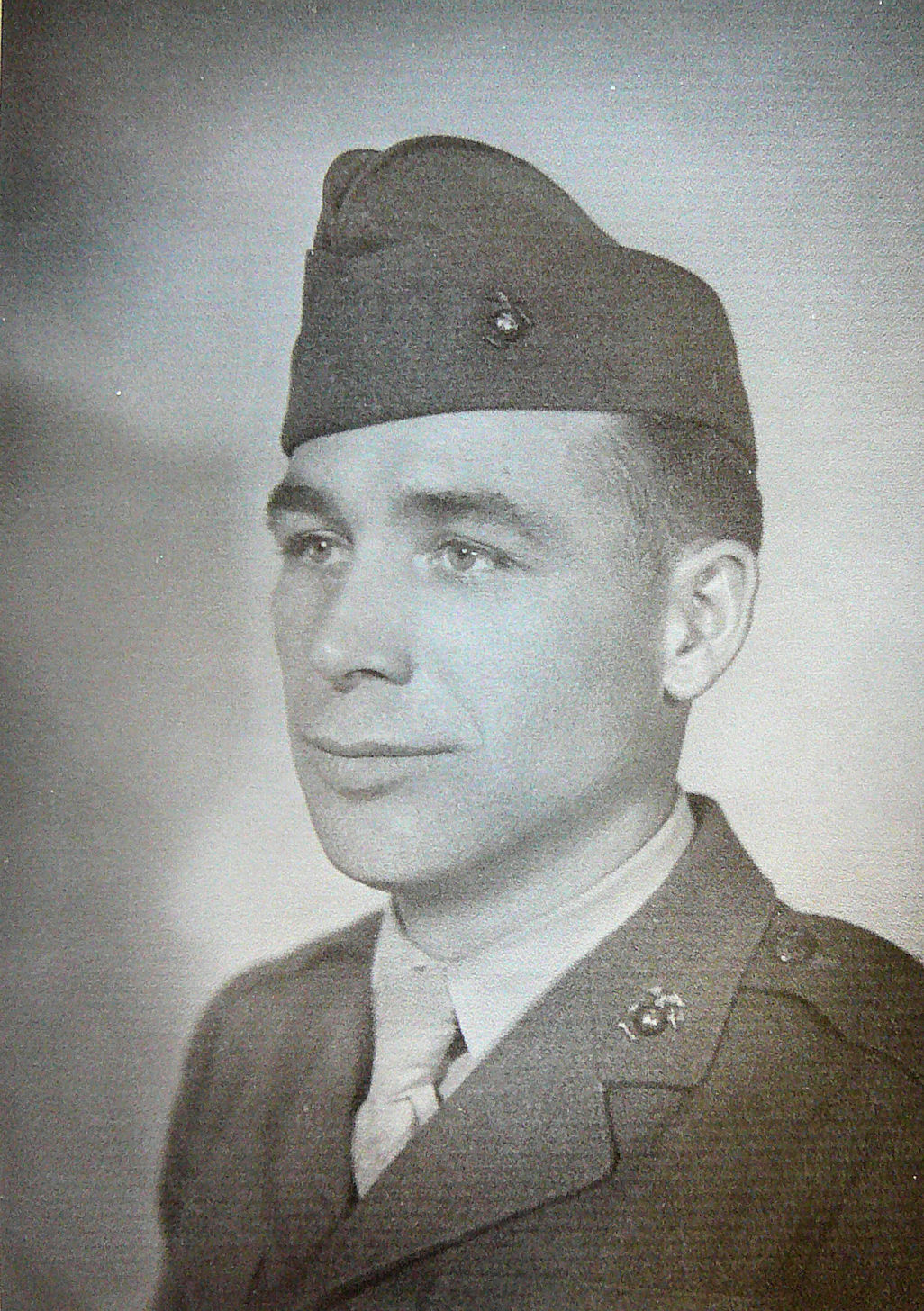
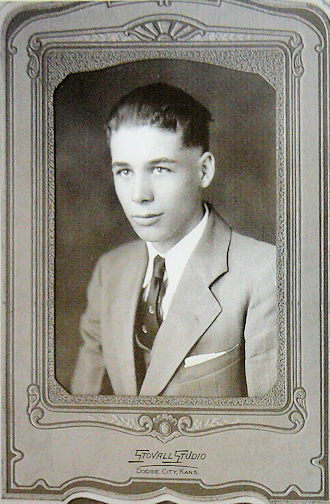
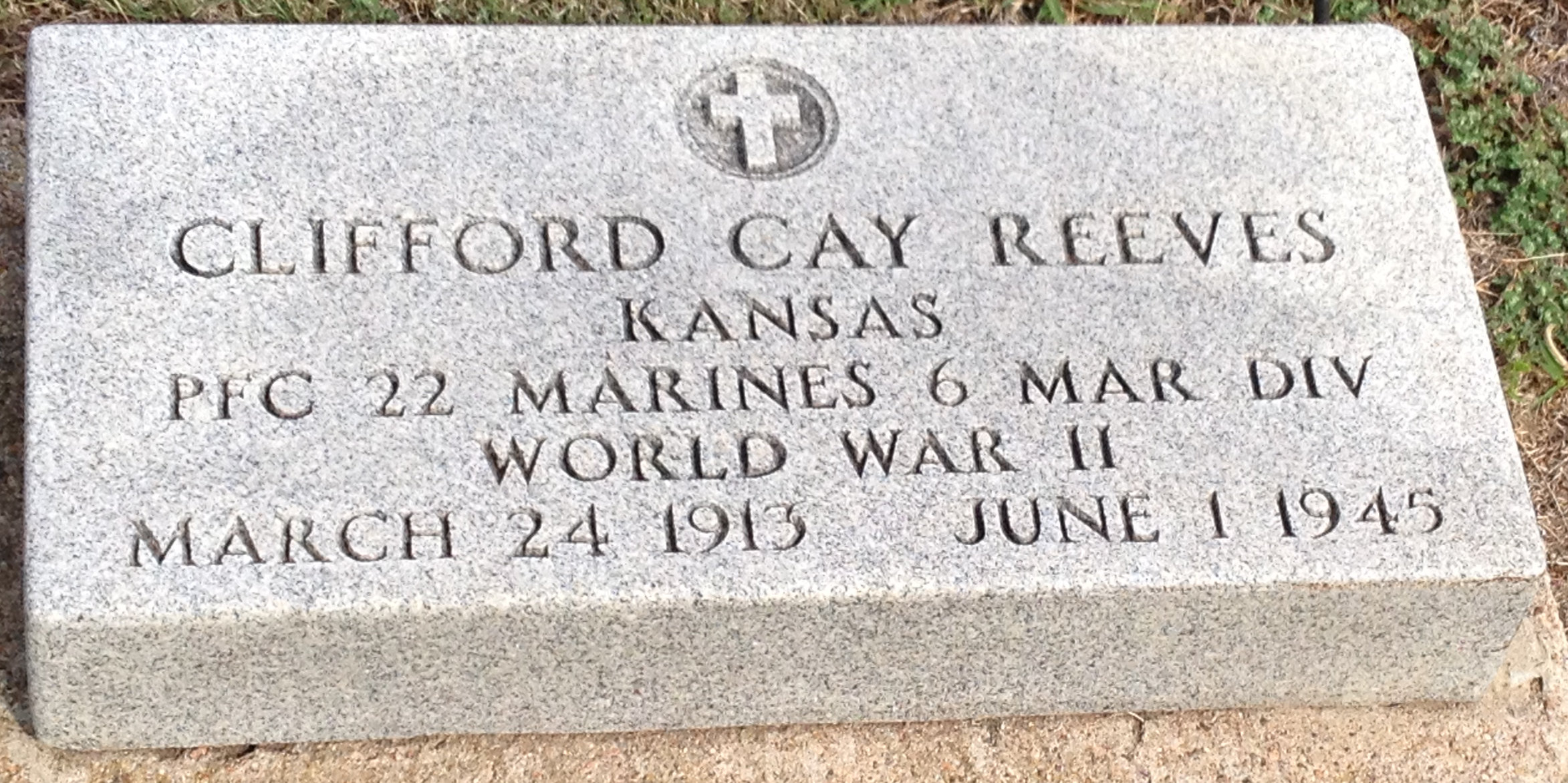
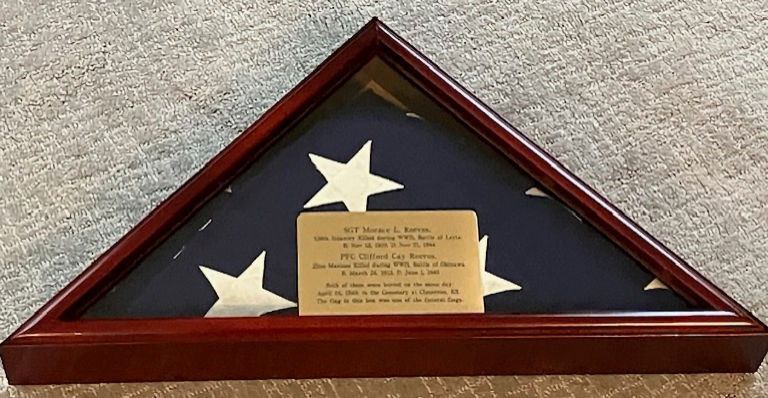
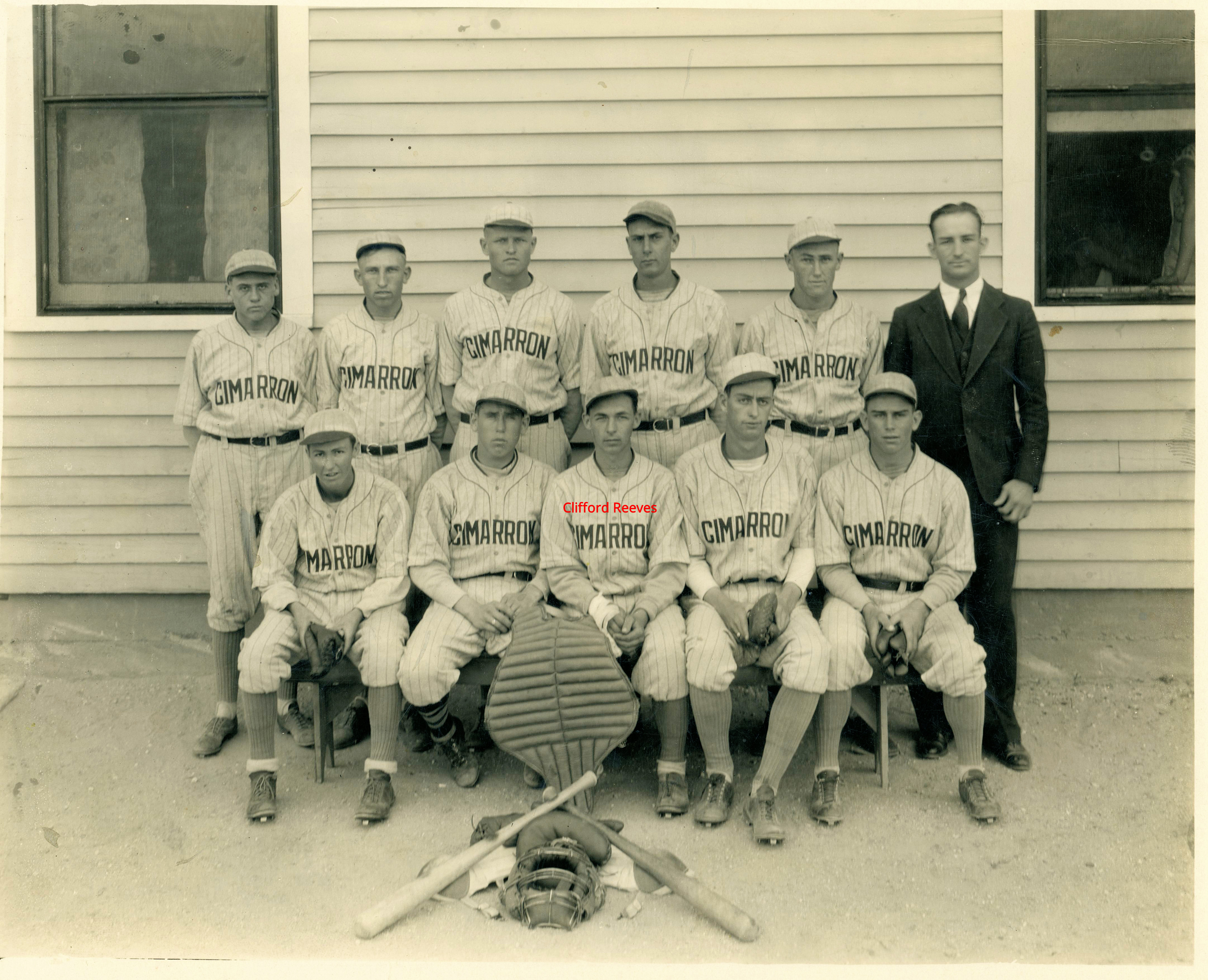
Clifford Cay Reeves was born on March 24, 1913, to Robert and Pearl Reeves. At the time of his birth, Robert was 35 and Pearl was 27. Clifford was the fifth of seven children in the Reeves family, who had homesteaded in Meade County, Kansas, in 1905. In 1921, the family relocated to Cimarron, where they established a blacksmith shop.
Clifford graduated from Cimarron High School with the Class of 1932. Outside of school, he could often be found working in the family’s blacksmith shop, a fixture of the Cimarron community for over two decades.
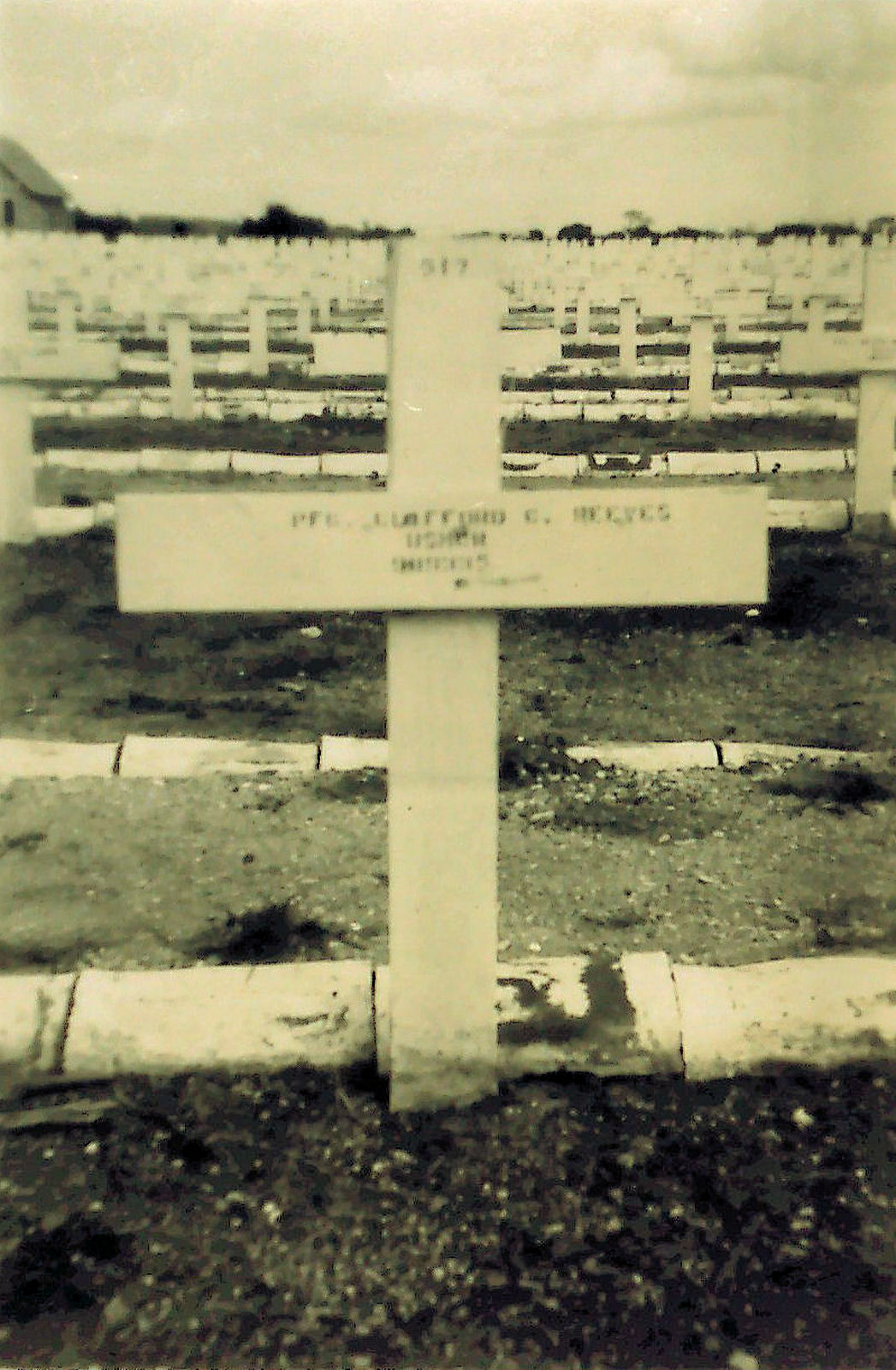
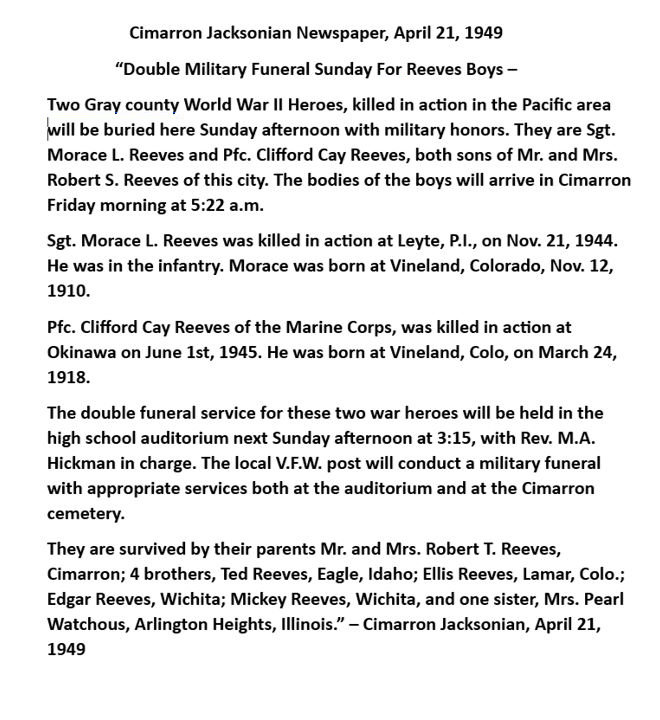
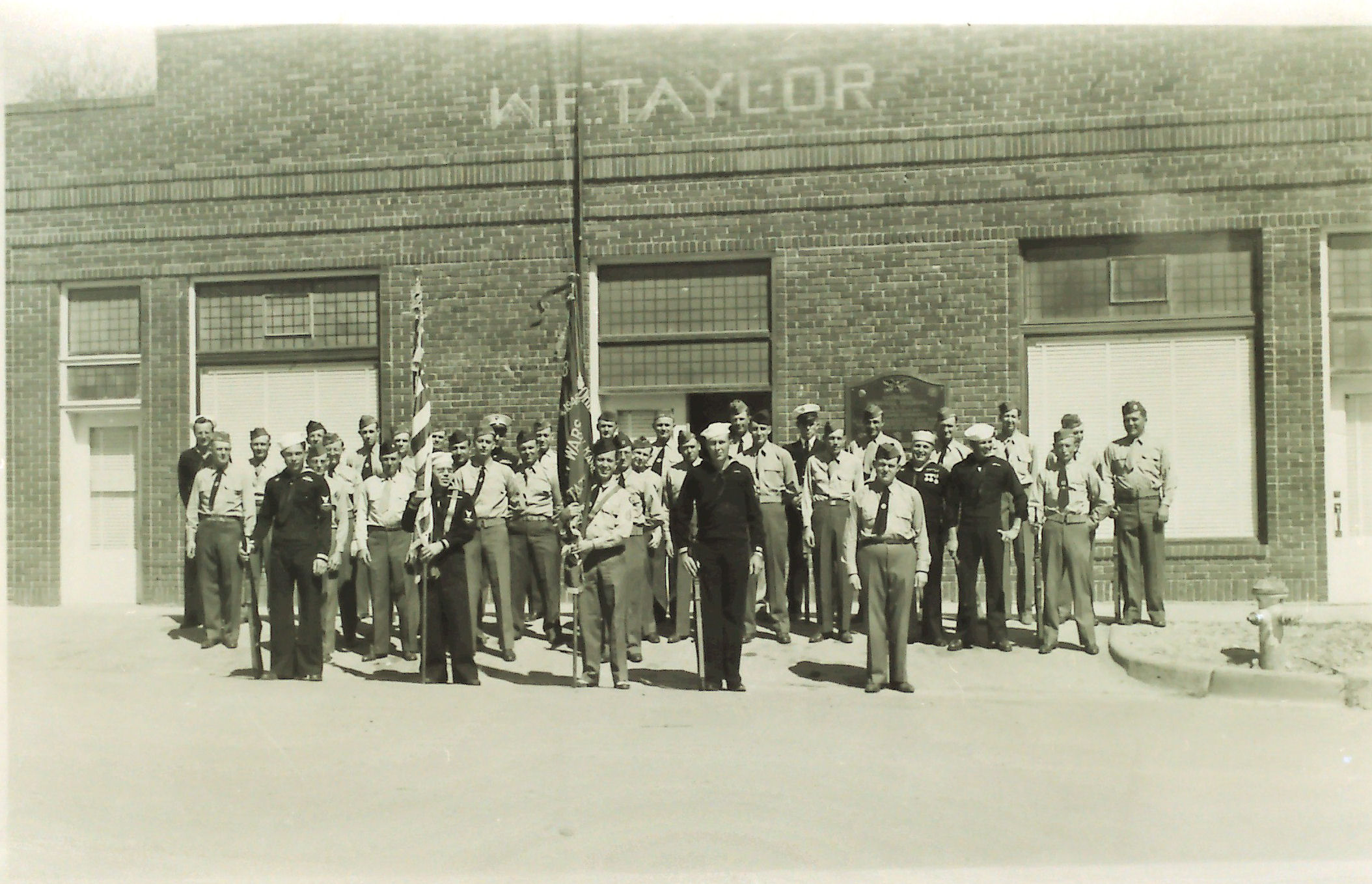
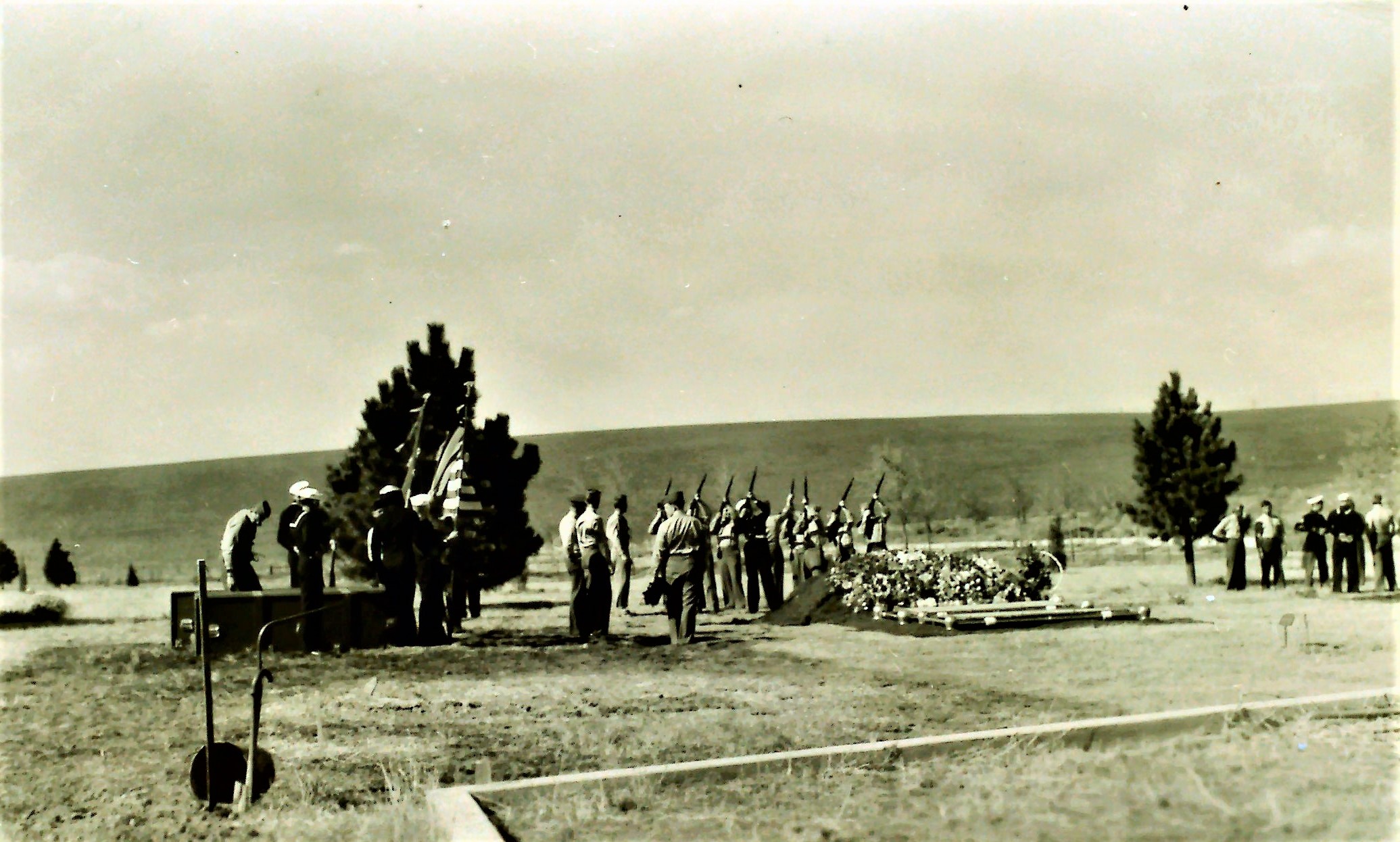
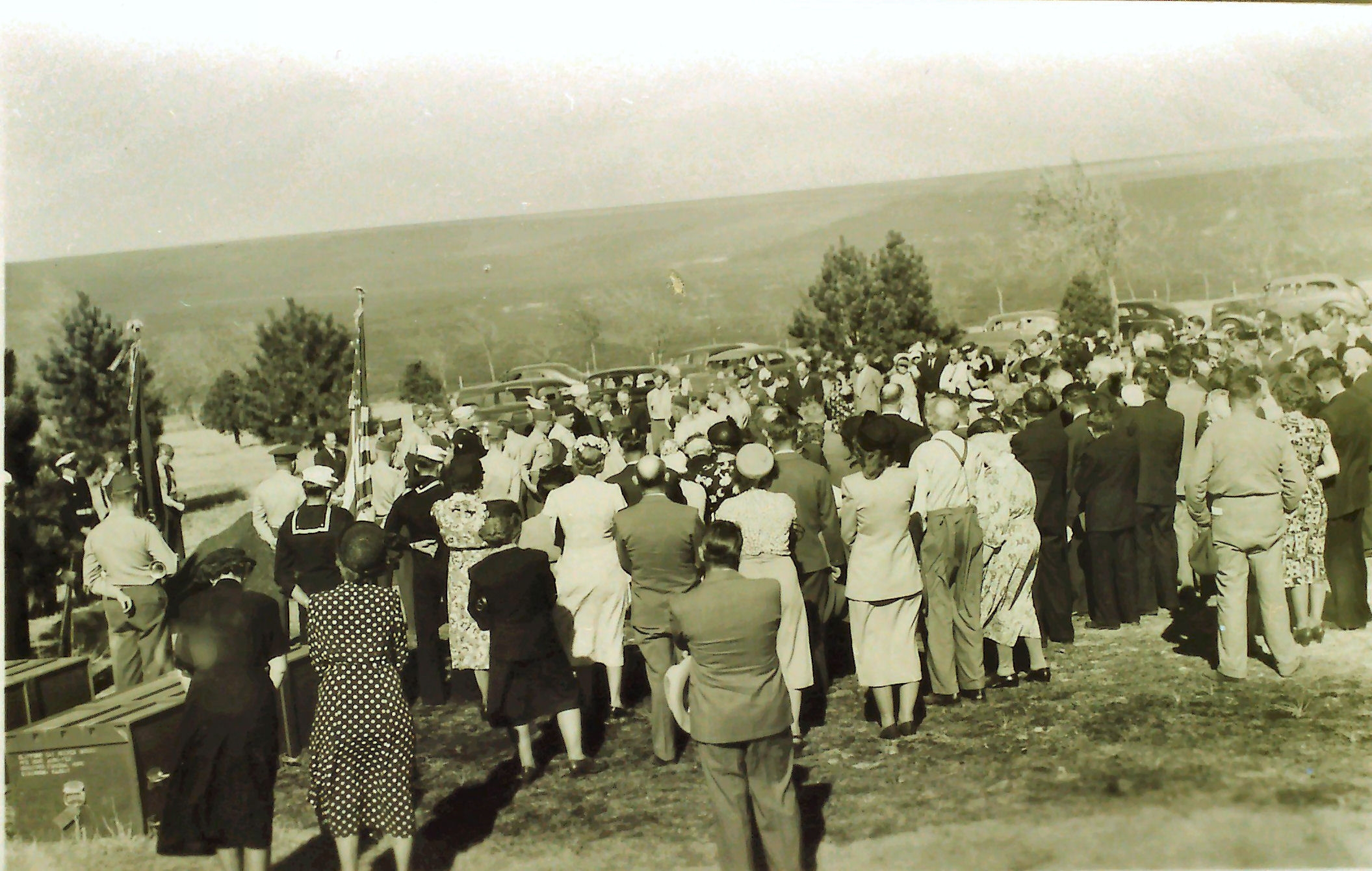
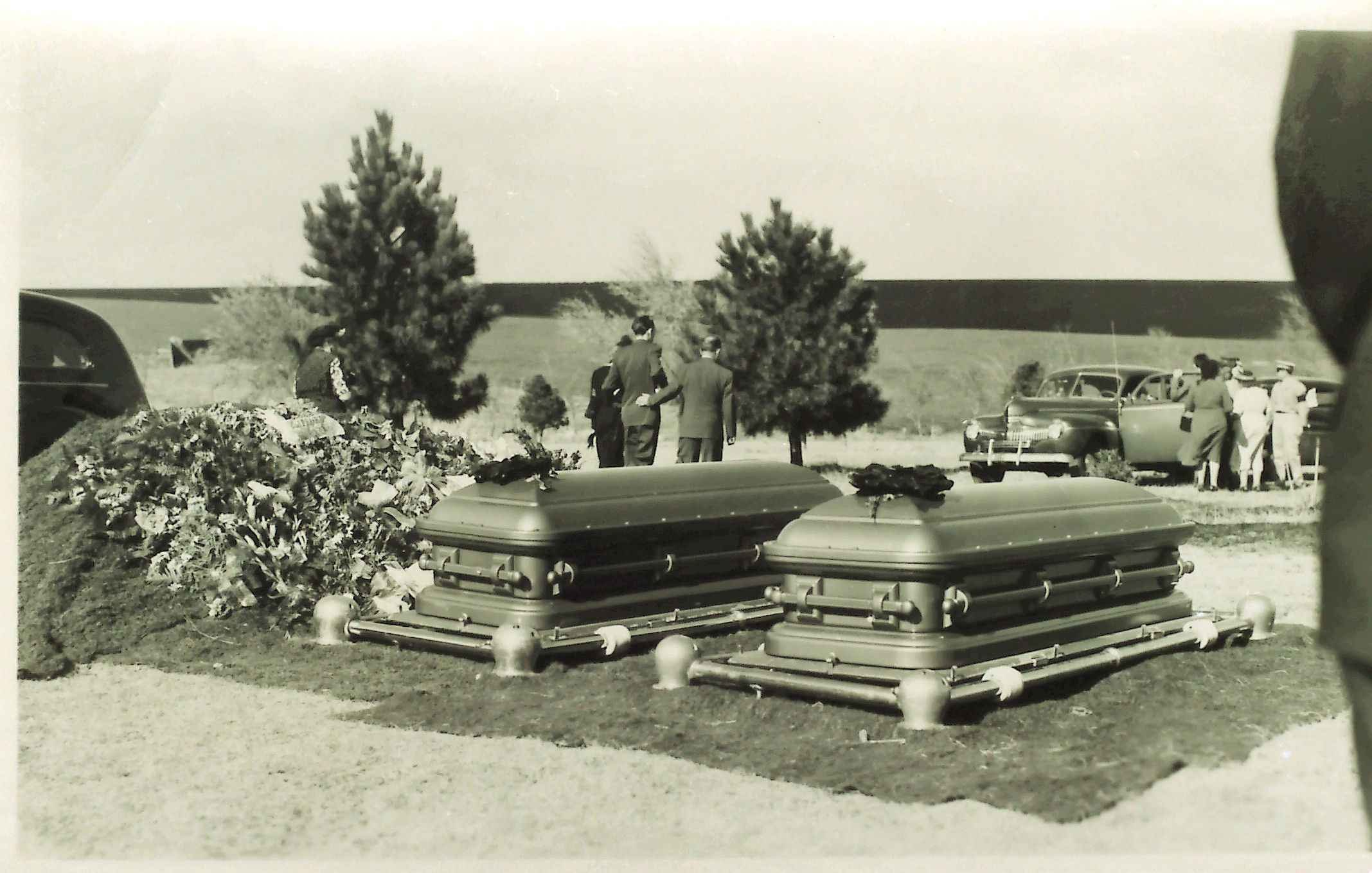
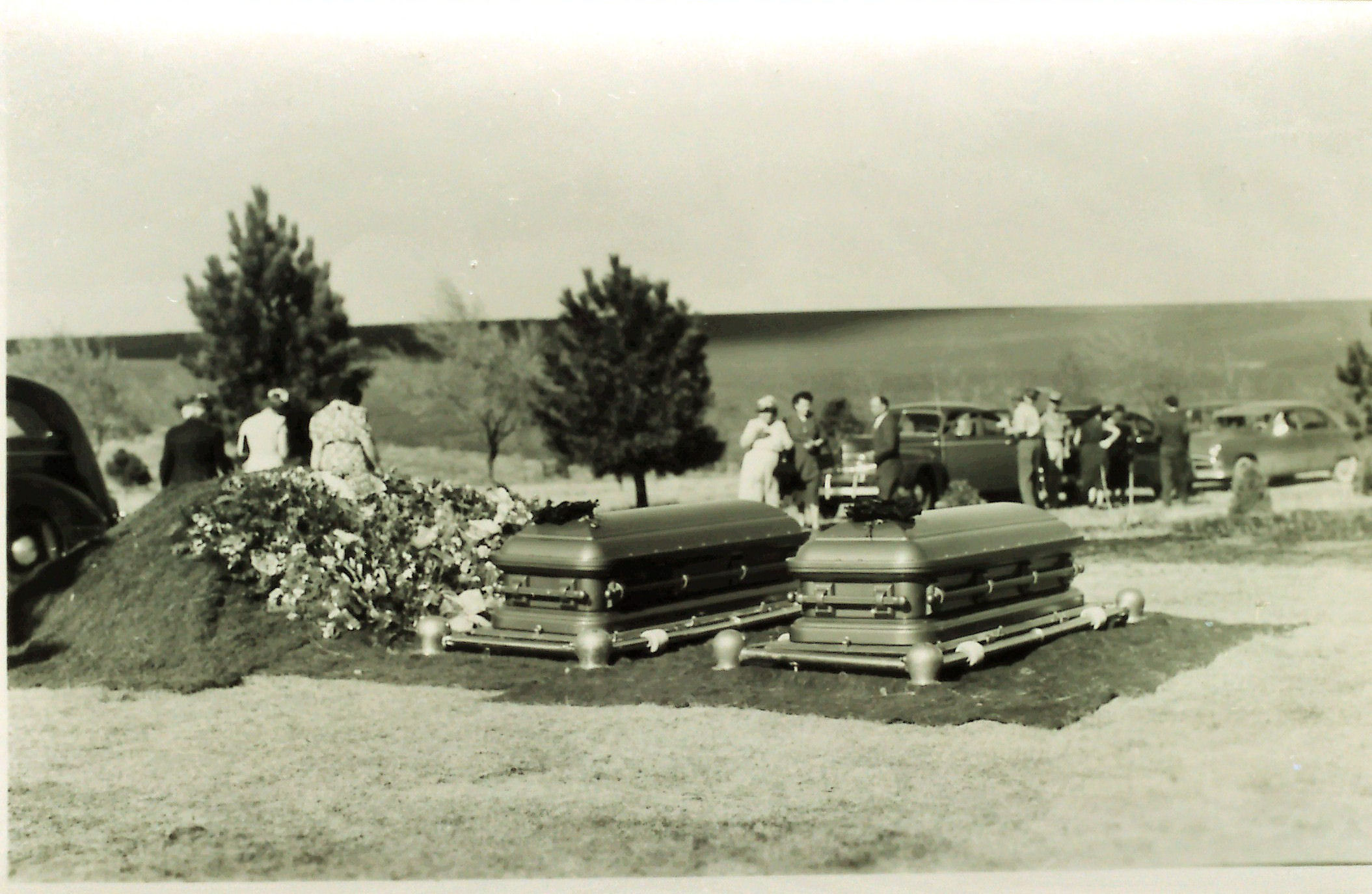
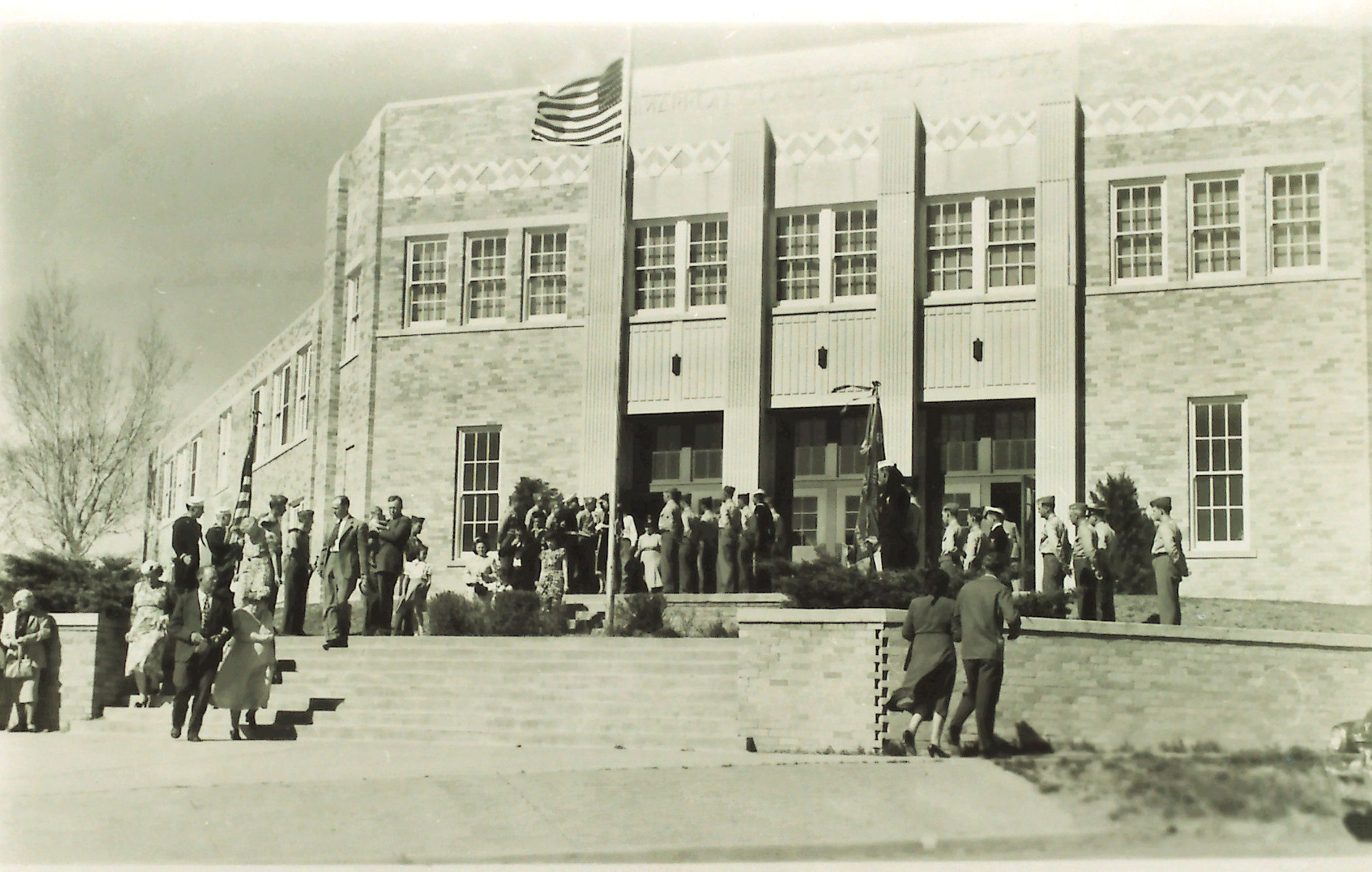
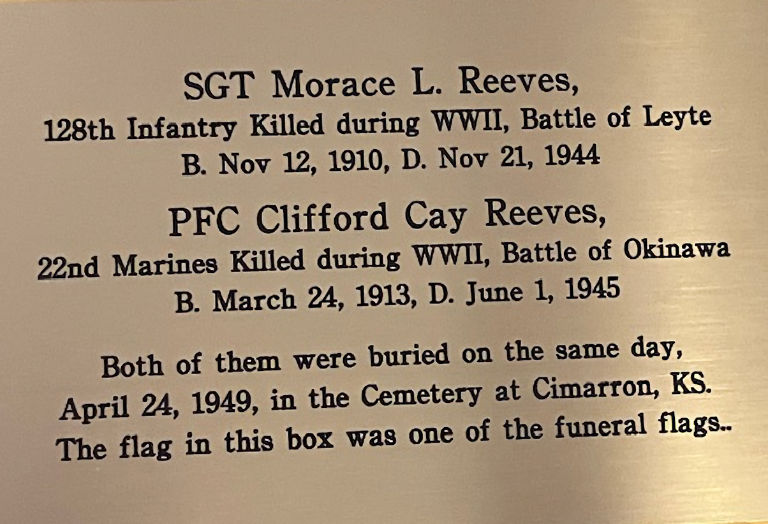
Private First Class Clifford Reeves was killed in action on June 1, 1945, during the Battle of Okinawa, at the age of 32. His older brother, Morace L. Reeves, was also killed in the war, falling in combat on Leyte on November 21, 1944. The remains of both brothers were returned to Cimarron and laid to rest side by side in the local cemetery on April 24, 1949.
On June 1, 1945, the 22nd Marine Regiment of the 6th Marine Division was actively engaged in operations during the Battle of Okinawa. Following intense combat in May, including the capture of Sugar Loaf Hill, the regiment had advanced into the city of Naha, the capital of Okinawa. By late May, they had reached the Asato River, which bisected the city. After crossing the river, the 22nd Marines continued their push into western Naha, encountering resistance from Japanese forces. Their efforts were part of a broader strategy to secure the city and prepare for subsequent operations targeting the Oroku Peninsula, a stronghold of Japanese naval forces. It was quite likely this was the situation PFC Clifford Reeves was involved in when he was killed.
The 22nd Marine Regiment, part of the 6th Marine Division, played a pivotal role in the
Battle of Okinawa during World War II. The battle commenced on April 1, 1945,
when U.S. forces landed on Okinawa, aiming to secure a strategic base for
operations against mainland Japan.
Initial Landings and Northern Advance
On D-Day, the 22nd Marines landed on Green Beach, securing the left flank of the landing force. They advanced northward, capturing the Yontan airfield and moving
towards the Motobu Peninsula. By April 13, they reached Hedo-Misaki, the
island’s northern tip, effectively securing northern Okinawa.
Engagements in Southern Okinawa
Subsequently, the 22nd Marines were redeployed to the island’s southern sector, encountering fierce resistance. A notable engagement was the assault on Sugar Loaf Hill, a
strategically significant elevation. The regiment faced intense combat, with
heavy casualties reported during this operation.
Leadership and Sacrifice
The regiment’s leadership demonstrated exceptional valor. Colonel Harold C.
Roberts, who assumed command during the battle, was killed by a Japanese sniper on June 18, 1945. Lieutenant Colonel August Larson then took command, leading the regiment through the final stages of the campaign. Additionally, Major Henry A. Courtney Jr.,
serving as the executive officer of the 2nd Battalion, 22nd Marines,
posthumously received the Medal of Honor for his heroic actions during the
battle.
Conclusion
The 22nd
Marine Regiment’s contributions were instrumental in the eventual capture of
Okinawa. Their efforts, marked by determination and sacrifice, significantly
impacted the Pacific Theater’s outcome during World War II.